Key Takeaways
Used parts can make an Outback repair more affordable, provided the component is matched carefully and checked before purchase.
- Confirm the Outback’s year, generation, engine, transmission, and drivetrain before ordering.
- Use the VIN, part number, connector design, and clear photos to reduce compatibility mistakes.
- Ask about condition, testing, mileage, warranty coverage, and return arrangements.
- Treat airbags, electronic modules, driveline parts, and structural components with extra care.
- Have safety-critical work inspected or completed by a suitably qualified professional.
Why used Subaru Outback parts are a smart choice in Canning Vale
For many owners, a used component is a practical alternative when a new replacement costs more than the vehicle’s current value. A local search also makes it easier to discuss the exact problem rather than ordering from a catalogue alone. The focus keyword for this guide is Used Subaru Outback parts Canning Vale WA – wrecking daily, but the buying principles apply to any local parts search.
Lower costs than new replacement parts
Used parts are often considered because they can reduce the cost of an otherwise sound vehicle repair. The saving varies with demand, condition, mileage, and availability, so a low price should not be the only deciding factor. Compare the complete cost, including collection, delivery, fitting, fluids, seals, and any diagnostic work.
A sensible quote should make clear what is included and whether the part has been inspected. For an older Outback, a good used panel or trim piece may also be a better visual match than a cheaper universal alternative.
Access to genuine Subaru components
A dismantled Outback may provide original-equipment components that were designed for the same model family. That can be useful for body fittings, interior pieces, brackets, switches, and other items where shape and connector placement matter. It still does not guarantee compatibility, because equipment can change between years, variants, and drivetrains.
Ask for the donor vehicle details and compare the supplied part with the one being removed. Photos of mounting points and plugs are often more useful than a broad description such as “fits Outback.”
Benefits for older Outback models
Older vehicles can be difficult to support with readily available new parts, particularly when a trim piece, lamp assembly, or interior switch is no longer commonly stocked. Used inventory may offer more realistic options for keeping a familiar vehicle on the road. It can also help preserve the original appearance of an older model.
That advantage comes with a responsibility to check wear. Rubber, seals, wiring insulation, and plastic clips may have aged even when the main component looks acceptable.
Environmental advantages of automotive recycling
Reusing a serviceable component keeps more material in circulation and can reduce the need to manufacture a replacement from new resources. Automotive recycling also separates useful parts from vehicles that are no longer economical to repair. The environmental benefit is strongest when the part is genuinely suitable and remains in service for a useful period.
Buying carefully supports that outcome. A mismatched or unsafe component that is discarded after one failed installation creates extra cost and waste rather than avoiding it.
Which Subaru Outback parts are commonly available
A wrecker’s inventory changes constantly because it depends on incoming vehicles, demand, and the condition of each donor car. Some components are easier to identify and resell than others, while highly sought-after items may move quickly. The most useful starting point is a precise request supported by the vehicle details.
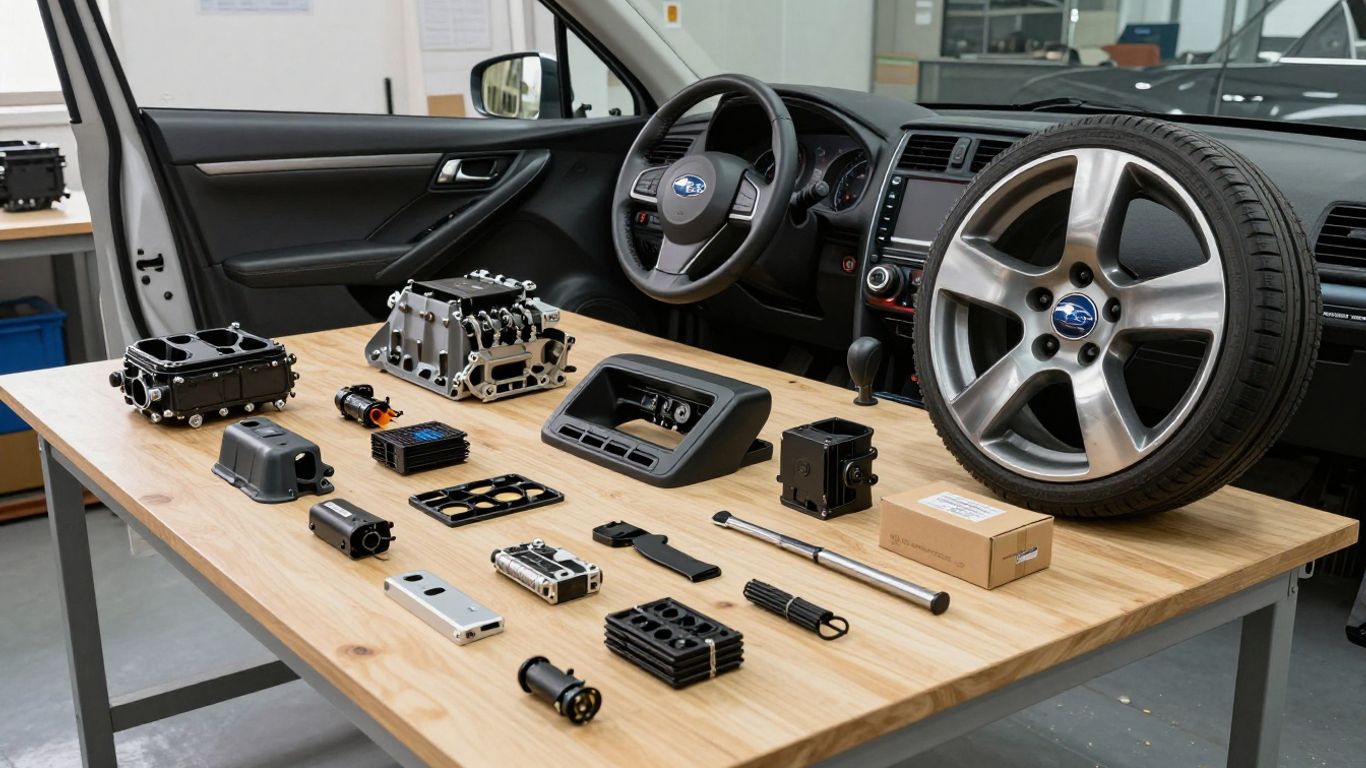
A clear photo of the old component, its connectors, and nearby mounting points can help narrow the search. Availability should always be confirmed rather than assumed from a general parts category.
Engines, transmissions, and driveline components
Engines, gearboxes, differentials, driveshafts, axles, and related hardware may be available from a dismantled Outback. These parts need closer matching than many cosmetic items because engine codes, transmission types, final-drive ratios, and drivetrain configurations can affect fit. Ask for mileage, operating history, compression or function checks where relevant, and the terms of any warranty.
A used driveline component should be assessed as part of the vehicle system, not as an isolated bargain. Small differences can create noise, vibration, warning lights, or poor operation after installation.
Body panels, doors, and exterior trim
Bonnet panels, guards, doors, tailgates, bumpers, grilles, mirrors, lamps, and mouldings are common requests after collision damage or weather-related deterioration. Colour matching is not guaranteed, even when the paint code appears similar, because age and exposure change the finish. Check hinges, mounting tabs, seams, and hidden corrosion before agreeing to buy.
For panels, ask whether the component is supplied bare or with attached hardware. That distinction affects both price and the time required to transfer handles, glass, wiring, and trim.
Interior parts and electrical components
Seats, consoles, dashboards, door trims, switches, window regulators, audio units, and wiring components may be sourced from another Outback. Interior parts are often affected by sun exposure, stains, broken clips, and previous repairs, so detailed photos matter. Electrical parts should be compared by plug shape, pin arrangement, part number, and the vehicle’s equipment level.
A replacement module may also need programming or configuration after fitting. Confirm that requirement before purchase rather than assuming a direct swap will restore every function.
Suspension, steering, and braking parts
Struts, control arms, hubs, steering components, brake calipers, and related hardware can be useful when inspected and matched correctly. Wear is harder to judge from appearance alone, particularly in components with bearings, bushes, seals, or friction surfaces. Ask what testing has been completed and whether consumable items should be replaced at the same time.
For safety-related repairs, professional assessment is sensible. A used part may be serviceable, but correct installation and measurement are just as important as the part itself.
How to find the right part for your Outback
Compatibility is the central challenge in buying used parts. Two Outbacks can look nearly identical while using different sensors, wiring, suspension parts, or driveline components. Gather the vehicle information before contacting a seller, and keep the old part available for comparison where possible.
Confirm the model year and generation
Start with the build year, model year, body style, and generation. Registration details can help, but they may not identify every production change, especially around a model update. A photo of the vehicle and the existing component gives the seller another way to verify the request.
Do not rely on appearance alone. A panel may look right while its bracket, lamp connection, or trim profile differs from the original.
Match engine, transmission, and drivetrain specifications
Record the engine size or code, transmission type, and whether the vehicle uses the relevant all-wheel-drive configuration. These details are especially important for engines, transmissions, differentials, axles, control modules, and exhaust-related hardware. If you are unsure, use the vehicle documentation or ask a qualified technician to identify the specification.
The table below shows the information that usually matters most for different part groups.
| Part group | Details to confirm | Why it matters |
|---|---|---|
| Engine and transmission | Engine code, transmission type, model year | Mounts, sensors, controls, and ratios can differ |
| Body and trim | Body style, colour code, door position | Shape, finish, and mounting points must align |
| Electrical component | Part number, plug, pin layout, equipment level | Similar-looking modules may not communicate correctly |
| Suspension and brakes | Variant, axle position, dimensions | Fit, handling, and safe operation depend on accurate matching |
This information turns a vague request into a traceable parts search. It also gives you something specific to check when the quoted item arrives.
Use the vehicle identification number
The VIN is one of the most useful references when requesting a part search. It can help identify the vehicle’s production details and narrow down possible variations, although it should be used alongside the part number and physical comparison. Share it through an appropriate channel and avoid assuming that a VIN check removes the need for inspection.
If the seller asks for additional details, provide them rather than treating the VIN as the only answer. Photos, fault symptoms, and the original component can resolve differences that a basic catalogue lookup may miss.
Compare part numbers and connector designs
Read the number from the original component where possible, including suffixes and revision markings. Compare connector shape, wire count, mounting holes, gear or shaft dimensions, and the position of brackets. This is particularly valuable for sensors, control units, switches, and lighting assemblies.
A close visual match is a starting point, not proof of fit. If a number differs, ask whether the replacement is confirmed compatible or merely similar.
What to check before buying used parts
A used part should be treated as a component with a history, not as a new item in cheaper packaging. Condition, donor mileage, storage, testing, and warranty terms all affect its real value. Take time to ask questions before money changes hands, especially for parts that are expensive to install.
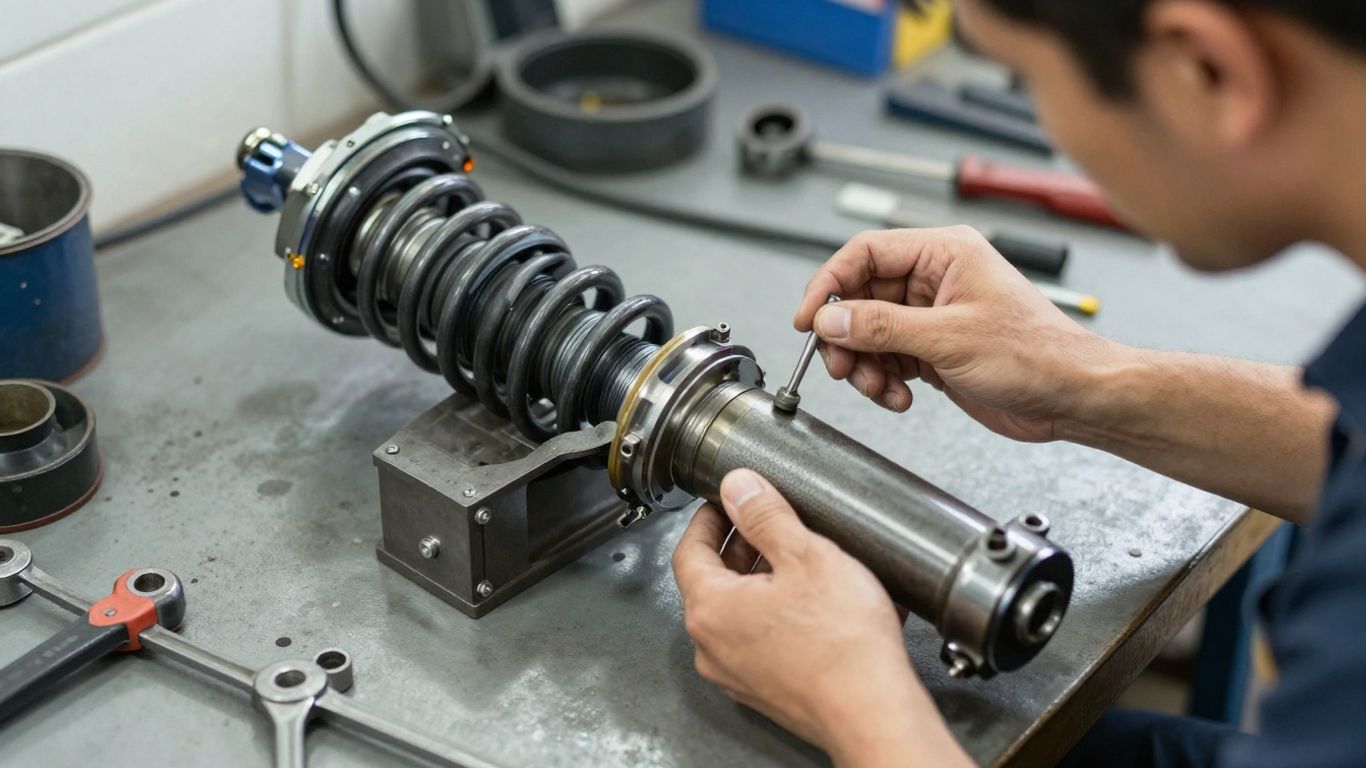
Good photographs can reveal cracks, corrosion, missing clips, damaged plugs, and fluid leaks, but they cannot replace a proper inspection. Request the details you need before arranging collection or delivery.
Inspecting condition and signs of damage
Look for cracks, bent mounting points, corrosion, oil or coolant residue, broken connectors, and evidence of impact. For body parts, inspect edges and hidden attachment areas as well as the visible surface. For mechanical parts, ask whether shafts turn freely and whether sealing surfaces or threads are damaged.
When a component’s internal condition cannot be confirmed, the warranty and return terms become more important. Do not allow a clean photograph to create confidence that the available evidence does not support.
Checking mileage and service history
Mileage is useful context for engines, transmissions, differentials, hubs, and other wear-prone components. It is not a complete condition report, because maintenance quality, storage, accident history, and operating conditions also matter. Ask whether the mileage belongs to the donor vehicle and whether service records or removal notes are available.
For a high-value part, write down the information supplied in the quote or invoice. Clear records make later questions easier and help distinguish the purchased component from another similar item.
Asking about testing and warranties
Ask what testing was completed, when it was performed, and whether the test applies to the actual part being sold. A warranty should state the coverage period, exclusions, fitting requirements, and whether labour or related damage is excluded. Those details can change the value of a part substantially.
A used part is only a good purchase when its condition, compatibility, and terms are clear enough to manage the risk.
Use the answers to compare offers on more than price. A tested component with clear coverage may be preferable to an unverified item that appears cheaper at first.
Confirming return and exchange policies
Before ordering, ask whether the part can be returned if it does not match, arrives damaged, or fails within the stated coverage period. Confirm the time limit, required evidence, packaging expectations, and who pays return freight. Some items may be excluded because they are electrical, special-order, modified, or already installed.
Keep the receipt, messages, photographs, and packaging until the part has been fitted and tested. That simple habit can make an exchange much less difficult.
How the purchasing process works with a local wrecker
A local wrecker can make the search more direct, but the process still works best when the request is specific. Start with the vehicle details and the exact component, then clarify condition, price, collection, and warranty before accepting the quote. This reduces back-and-forth and helps avoid an unsuitable dispatch.
Requesting a part search and quote
Describe the part by its common name and location, such as left-hand front door, rear differential, or driver-side window regulator. Include the vehicle year, engine, transmission, VIN, and any number printed on the old component. Ask whether the quoted price includes attached hardware, testing, delivery, or tax where applicable.
A useful quote should identify the part clearly enough that both sides understand what is being reserved. If the answer is uncertain, ask for photographs before proceeding.
Providing photos and vehicle details
Send a full-vehicle image, a close-up of the damaged or missing part, and photographs of connectors, labels, and mounting points. Mention whether the vehicle is standard or has modifications that could affect fit. Also explain the symptoms if you are replacing a mechanical or electrical item rather than visible damage.
This information helps separate a compatibility problem from a diagnosis problem. A seller can locate a part, but a mechanic may still need to confirm that it is the actual cause of the fault.
Arranging pickup or local delivery
Confirm the collection address, opening hours, handling requirements, and whether the part will be ready when you arrive. For delivery, check the expected timing, freight cost, packaging, and what to do if the item arrives damaged. Large panels and heavy driveline components need different handling from switches or trim.
Inspect the package before signing where the carrier permits it. Photograph visible damage immediately and keep the packaging until the matter is resolved.
Understanding payment and collection requirements
Ask when payment is due, which methods are accepted, and whether an order is held only after payment or confirmation. Make sure the invoice or receipt lists the correct part and any agreed warranty. If someone else is collecting it, confirm what identification or order details they need.
Clear arrangements protect both parties. They also prevent a rushed collection from turning into a dispute about the item, price, or promised condition.
Subaru Outback parts that need extra caution
Some components deserve a higher level of scrutiny because an incorrect or damaged part can affect occupant protection, vehicle control, or expensive systems. Cosmetic parts are usually easier to assess than safety and electronic components. When the consequences of a mistake are serious, the cheapest option is rarely the only consideration.
Airbags, seat belts, and safety systems
Airbags, seat belts, pretensioners, impact sensors, and related safety components should be sourced and installed with great care. A part may look intact while having a deployment history, damaged wiring, or an unknown storage history. Do not fit a questionable safety component or attempt to bypass a warning light.
Use a qualified repairer who can verify the part and test the system correctly. Safety equipment should never be selected solely by appearance or low price.
Sensors, modules, and electronic controls
Sensors and control modules can vary by engine, transmission, equipment level, and software revision. Check the part number, connector, mounting position, and whether coding, pairing, or calibration is required. A used module may need additional procedures before the vehicle recognises it.
Avoid applying power to an unknown electronic component without suitable guidance. Incorrect testing can damage the part and make the original diagnosis harder.
Engines, turbochargers, and transmissions
Major mechanical assemblies require evidence of condition and a realistic installation plan. Ask about donor mileage, fluid contamination, compression or function tests where relevant, and included accessories. Confirm whether ancillary items such as sensors, manifolds, torque converters, or wiring are part of the sale.
Budget for fresh fluids, filters, seals, and possible labour. The purchase price is only one part of the cost of returning a drivetrain to reliable service.
Suspension and structural components
Suspension arms, hubs, subframes, steering parts, and structural panels can be affected by collision forces that are not obvious in a photograph. Check for bends, cracks, distorted mounting points, and corrosion. Measurements may be needed before a part is trusted, particularly after an accident.
Have safety-critical suspension or structural work inspected after installation. Correct wheel alignment and torque settings are essential to the final result.
How to install and maintain used Outback parts
Installation is where a reasonable parts purchase can either succeed or become expensive. Use the correct workshop information, compare the replacement with the removed component, and clean the mating surfaces before assembly. Keep notes and photographs as you work, particularly when removing wiring or multiple brackets.
Deciding between DIY and professional installation
Simple trim, mirror, or non-technical replacement work may suit an experienced owner with the right tools. Engines, transmissions, braking systems, airbags, suspension, and electronic modules generally deserve professional involvement or inspection. The decision should reflect the risk, required equipment, and consequences of an installation error.
If a job involves lifting the vehicle, handling pressurised systems, or working near safety devices, do not improvise. A short professional assessment can prevent a much larger repair.
Replacing seals, fluids, and wear items
A used mechanical component may need new gaskets, seals, filters, fluids, clips, bushes, or fasteners before it is installed. Replacing accessible wear items at the same time can avoid removing the same assembly twice. Use the correct fluid specifications and dispose of old fluids responsibly.
Do not assume that a donor part is ready to fit simply because it has been removed intact. Preparation is part of the installation cost and reliability calculation.
Calibrating electronic and safety components
Some replacement modules, cameras, sensors, and safety components may require coding, relearning, or calibration after installation. Follow the vehicle-specific procedure and scan for fault codes before returning the vehicle to normal use. A warning light that disappears temporarily is not proof that the system is working correctly.
Calibration should be completed with suitable equipment and accurate measurements. If the required procedure is unclear, stop and seek qualified help rather than guessing.
Testing the vehicle after installation
Begin with a visual check for loose fasteners, trapped wiring, leaks, and incorrect routing. Test the vehicle in a controlled area, listen for unusual noises, check warning lights, and confirm that the original symptom has been resolved. After a short drive, inspect again for fluid loss or movement at the repaired area.
For steering, suspension, braking, and driveline work, arrange a professional inspection or wheel alignment when appropriate. A careful final check is what turns a replacement part into a dependable repair.
Conclusion
Used Subaru Outback parts can be a sensible way to manage repair costs in Canning Vale when the component is matched carefully, its condition is understood, and installation is handled responsibly. Gather the VIN and part details, ask direct questions about testing and warranty, and give safety-critical work the professional attention it deserves.




