
Key Takeaways
Buying a used Subaru engine or transmission can be practical and affordable when fitment, condition, and total installation costs are checked carefully.
- Match the part to the Subaru model, year, engine code, transmission code, and drivetrain.
- Ask for donor vehicle details, mileage, service history, and testing information.
- Confirm exactly which sensors, accessories, modules, and components are included.
- Read warranty and return conditions before paying, including exclusions and freight responsibilities.
- Keep written records of fitment advice, invoices, delivery, and after-sales support.
Understanding Subaru wreckers in Liverpool
Subaru wreckers dismantle end-of-life, damaged, or unwanted vehicles and recover usable components for resale. For a buyer, that can mean access to genuine used engines, transmissions, body parts, and smaller mechanical items without buying a complete vehicle. The useful work is not simply locating a part; it is establishing whether that part is suitable for the car receiving it. A careful supplier should be able to discuss the donor vehicle and the part’s condition in practical terms.
What Subaru wreckers do
A wrecker usually assesses a vehicle, removes usable components, identifies them, and stores them for later sale. Engines and transmissions may be sold as complete assemblies or with selected accessories removed, depending on what was available from the donor vehicle. That is why two listings that appear to describe the same part can differ in what is actually included.
When contacting Subaru wreckers Liverpool, describe the vehicle accurately rather than relying on a broad model name. The model badge alone may not identify the engine, transmission, market specification, or drivetrain layout.
Why used powertrain parts can reduce costs
A used powertrain component can cost less than a new replacement, particularly when the original vehicle is older and its market value does not justify a high-priced replacement. It may also avoid the waiting period associated with ordering a less common unit. However, the purchase price is only one part of the calculation. Freight, preparation, fluids, seals, labour, and possible electronic programming can change the final figure.
The sensible comparison is the total fitted cost, not the cheapest listing. A lower-priced engine that arrives incomplete or requires extensive preparation may offer less value than a slightly dearer assembly with clear provenance and useful warranty cover.
When a used part is better than a rebuilt or new unit
A used part may suit a vehicle when the donor unit has reasonable mileage, a known history, and the same specifications as the original. It can also make sense when a rebuilt or new unit is unavailable, disproportionately expensive, or likely to delay the repair. The decision depends on the vehicle’s condition and the buyer’s tolerance for future repair risk.
A part is only a bargain when its identity, condition, and installation requirements are clear.
That principle applies equally to an engine and a transmission. A professional inspection and a written warranty can make a used option easier to assess, but neither removes the need to verify compatibility before ordering.
Finding the right used Subaru engine
Engine replacement begins with identification, not price. Subaru engines that look similar can differ in displacement, induction, sensors, wiring, emissions equipment, and control systems. The vehicle’s model year and trim provide useful starting points, but the engine code and original equipment details usually carry more weight. Collect those details before requesting quotes.
Matching the engine to your Subaru model and year
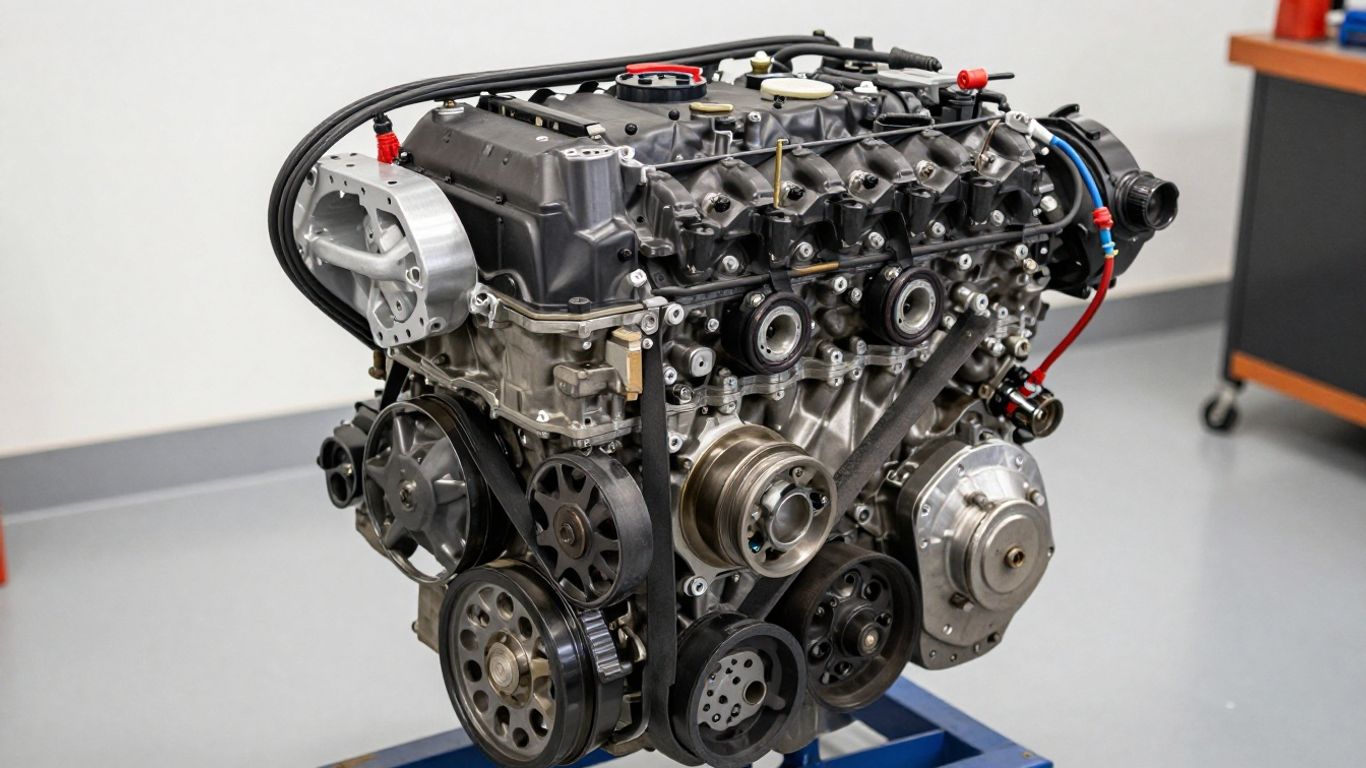
Start with the vehicle identification number, registration details, model, year, body style, and transmission type. Production changes can occur within one model generation, and an engine from a similar-looking Subaru may still require different ancillary parts or electronic controls. If the original engine is available, photograph its labels, connectors, intake arrangement, and major accessories.
A supplier can give better guidance when these details are provided together. Avoid ordering from a description that says only “fits Subaru” or names a model without a year range and specification.
Comparing engine codes, specifications, and mileage
The engine code should be compared with the original unit and with the supplier’s fitment information. Check displacement, compression-related specifications where available, induction type, emissions equipment, and whether the quoted mileage belongs to the engine or merely the donor vehicle. Mileage is useful, but it does not replace maintenance history or inspection evidence.
A written quote should state the code or specification being supplied. Exact identification matters because a visually similar engine can still create substantial installation and control-system complications.
Checking naturally aspirated and turbocharged options
Naturally aspirated and turbocharged engines are not interchangeable simply because they share a model name. Turbocharging affects the intake and exhaust systems, engine management, cooling requirements, and often the transmission pairing. Confirm whether the replacement includes the turbocharger, manifolds, intercooler-related components, sensors, and wiring, or whether those items must be transferred from the original engine.
The safest approach is to compare the complete installation requirements with the vehicle already in the workshop. A bare long block may be suitable for one repair plan but unsuitable for another if the expected accessories are missing.
Identifying complete engines versus bare assemblies
Ask whether the quote is for a complete engine, long block, short block, or another defined assembly. “Complete” can still mean different things, so request a component-by-component description. Clarify whether the starter motor, alternator, intake, exhaust manifolds, throttle body, injectors, sensors, engine mounts, and wiring are included.
This distinction affects both price and labour. If accessories must be transferred, their condition should be assessed before the replacement is fitted rather than discovered after the original engine has been removed.
Choosing a compatible used transmission
Transmission fitment involves more than selecting manual or automatic. Subaru drivetrains depend on transmission codes, final-drive relationships, electronic controls, axle arrangements, and the vehicle’s four-wheel-drive configuration. A unit that bolts into place may still be wrong for the differential ratio or control system. Treat the transmission as part of the complete drivetrain rather than an isolated component.
Comparing manual and automatic transmissions
Manual transmissions require checks on gear configuration, clutch arrangement, bellhousing details, shifter components, and associated driveshaft parts. Automatic units require additional attention to control modules, wiring, cooler lines, torque converters, and calibration. The replacement should match the vehicle’s original transmission type unless a qualified technician has planned a wider conversion.
Ask whether the supplied unit includes the torque converter, transfer-related parts where applicable, sensors, and external brackets. These details can materially affect installation time.
Verifying transmission codes and drivetrain layouts
The transmission code is a central fitment reference, alongside the model year and engine specification. Compare the code on the original unit, the donor vehicle information, and the supplier’s written description. Also confirm whether the car uses the expected drivetrain layout and whether the driveshaft, axles, mounts, and electrical connections are compatible.
A generic “automatic Subaru transmission” description is not enough for a purchase decision. The more specific the original and replacement details, the less room there is for an expensive mismatch.
Checking CVT compatibility and known service concerns
A CVT replacement should be assessed against the exact vehicle application, transmission code, control system, and service requirements. Ask whether the unit was tested, whether its fluid condition was recorded, and whether any known symptoms were present in the donor vehicle. Do not assume that a similar casing or model badge establishes compatibility.
The technician should also confirm whether the replacement requires programming, relearning, specific fluid, or inspection of related cooling and electrical systems. Those requirements belong in the repair plan before delivery.
Confirming four-wheel-drive and differential requirements
Subaru four-wheel-drive systems make differential and final-drive compatibility especially important. Differences in ratios can create driveline stress or unsuitable operation even when the transmission physically fits. Confirm the front and rear differential relationship, transmission code, transfer arrangement, and driveshaft requirements.
Where uncertainty remains, provide the VIN and the codes from the original drivetrain to the supplier and fitting workshop. Written confirmation is preferable to relying on a photograph or a general model description.
Inspecting used engines and transmissions before purchase
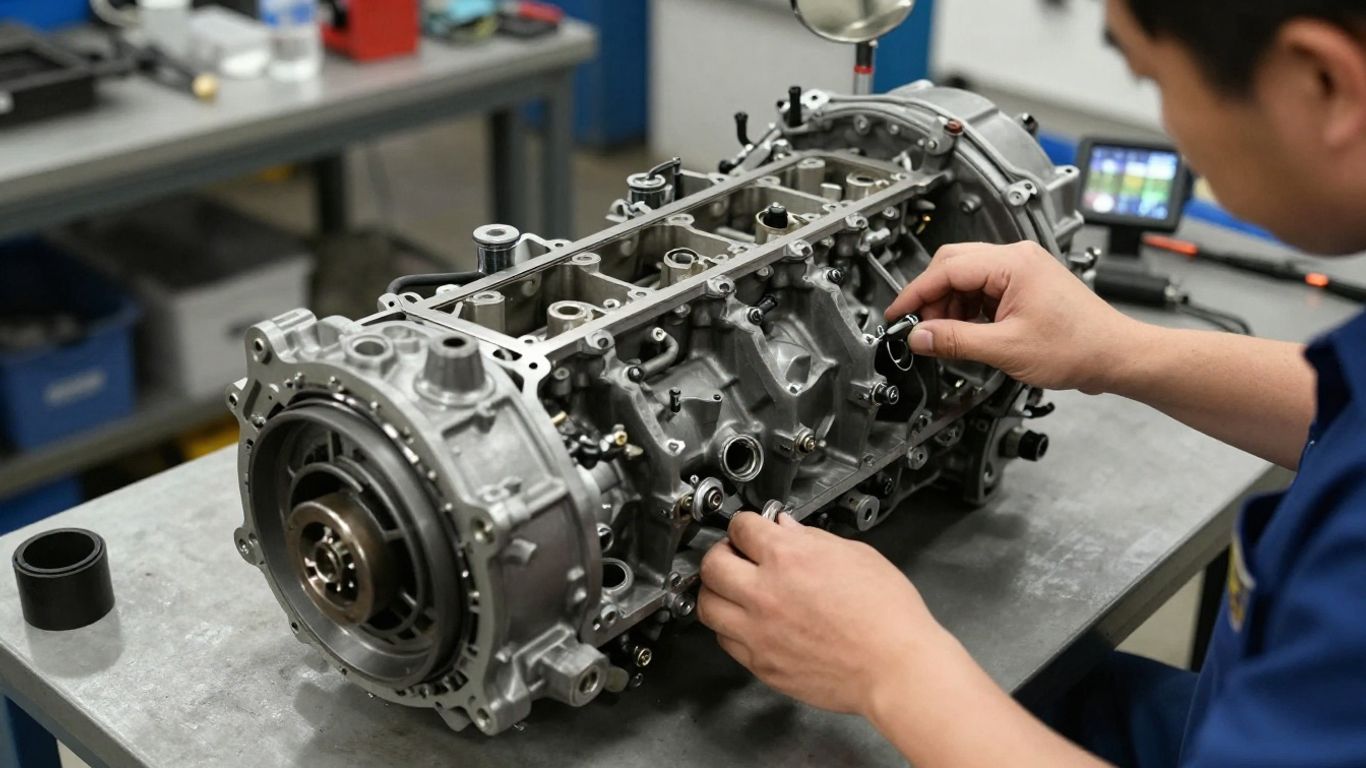
Inspection information helps turn a used component from an unknown risk into a considered purchase. Ask what the supplier knows about the donor vehicle, how the unit was removed, and what checks were performed before listing it. A clean exterior is useful but does not prove internal condition. The aim is to gather enough evidence to compare risk, price, and warranty terms.
Reviewing mileage, service history, and donor vehicle details
Request the donor vehicle’s model, year, registration or stock reference, mileage, and reason for dismantling where available. Service records, oil-change information, accident history, and evidence of overheating can add useful context. If the donor vehicle was damaged, find out whether the damage affected the engine, transmission, cooling system, or drivetrain.
Mileage should be recorded in the quote or invoice rather than discussed only by phone. That creates a clearer reference if a warranty issue arises later.
Checking for leaks, damage, and excessive wear
Before purchase, ask for photographs of mating surfaces, housings, seals, plugs, mounts, and visible connectors. Look for cracks, impact damage, corrosion, oil or coolant contamination, damaged threads, and signs of prolonged leakage. A removed engine or transmission should be stored in a way that protects openings from dirt and moisture.
Some surface grime is normal on a dismantled part, but unexplained damage deserves a direct answer. If the supplier cannot describe the condition or provide useful images, factor that uncertainty into the decision.
Asking about compression tests and bench testing
For an engine, ask whether compression testing, leak-down testing, oil-pressure checks, or other inspections were performed and whether the results are available. For a transmission, ask what bench testing or operational checks were completed, including evidence of abnormal noise, slipping, contamination, or fault codes where relevant. Testing practices vary, so the exact check matters.
A test result does not guarantee future performance, but it gives the buyer and installer a more useful starting point. Keep copies of any reports alongside the invoice and warranty information.
Confirming included sensors, accessories, and components
Make a written inventory before the part leaves the yard. For an engine, that may include sensors, manifolds, injectors, throttle equipment, brackets, mounts, and wiring. For a transmission, it may include the torque converter, sensors, cooler fittings, mounts, shifter parts, and related electrical components.
The installer can then identify what must be transferred from the original unit and what needs separate replacement. This prevents a supposedly complete assembly from becoming a series of unexpected parts orders.
Understanding pricing, warranties, and returns
A useful quote describes the part, its condition, what is included, and the terms that apply after delivery. Prices can vary because assemblies differ in mileage, completeness, testing, and warranty duration. Buyers should compare like with like instead of treating the lowest number as the best offer. A few minutes spent reading the conditions can prevent a costly misunderstanding.
Comparing quotes from Subaru wreckers in Liverpool
Request written quotes from Subaru wreckers in Liverpool that identify the engine or transmission code, donor details, mileage, inclusions, price, freight, and estimated dispatch timing. Check whether the price includes a refundable core charge or excludes accessories that the workshop expects to receive. Ask whether the quoted part is physically available or still awaiting removal.
A simple comparison table can separate the headline price from the practical value of each option:
| Quote detail | Why it matters | What to confirm |
|---|---|---|
| Part code and application | Establishes fitment | Original and replacement codes |
| Mileage and donor details | Adds condition context | Vehicle history and odometer record |
| Included components | Defines installation scope | Accessories, sensors, and modules |
| Warranty and returns | Sets post-sale protection | Duration, exclusions, and process |
After comparing these details, the cheapest quote may no longer be the cheapest repair. A complete and clearly documented unit can reduce delays at the workshop.
Reviewing warranty coverage and exclusions
Read whether the warranty covers the part only or also labour, freight, fluids, seals, and related damage. Check the duration, conditions for installation, exclusions for overheating or misuse, and any requirement for professional fitting. Some warranties require the buyer to contact the supplier before disassembly or repair work begins.
Ask how a fault is assessed and what evidence must be supplied. A clear process is more useful than a broad promise that does not explain what happens after a problem is reported.
Checking return conditions for incorrect parts
A return policy should explain the time limit, packaging requirements, restocking charges, freight responsibility, and whether the part must remain unmodified. Incorrect fitment claims may require photographs, code checks, or confirmation from a workshop. Do not assume an installed or disassembled component can be returned in the same way as an unused part.
Confirm the policy before ordering, especially when fitment information came from a third party. Written confirmation gives both sides a practical record.
Factoring in freight, fitting, fluids, and installation costs
Add delivery, workshop labour, seals, filters, fluids, gaskets, programming, clutch components, and disposal charges to the purchase price. A replacement transmission may also require inspection of the differential, driveshaft, cooler, or mounts. An engine may need timing components, hoses, belts, and sensors replaced while access is convenient.
This broader estimate helps determine whether the repair remains sensible. It also gives the workshop a clearer scope before the vehicle is dismantled.
Planning installation and compatibility checks
Good installation planning starts before the replacement arrives. The buyer, supplier, and workshop should agree on the part identity, included components, preparation work, and any electronic requirements. This reduces the chance that a vehicle will remain on a hoist while a missing sensor, bracket, or module is sourced. It also provides a fairer basis for warranty discussions.
Providing the vehicle identification number and registration details
Give the supplier the VIN, registration details, model, year, engine size, transmission type, and any relevant build information. Include photographs of identification labels when possible. These details help distinguish mid-year changes and regional specifications that a general model name may not reveal.
The fitting workshop should review the same information before ordering. Two independent checks are worthwhile when the replacement is a major powertrain component.
Preparing replacement engines for installation
A used engine should be inspected and prepared according to the workshop’s repair plan before it is installed. This may include checking accessible seals, rotating components where appropriate, inspecting mounts, and transferring only verified accessories from the original engine. The technician should also compare connectors and brackets rather than assuming they match.
Preparation is easier while the engine is outside the vehicle. Agree on the work in advance so the buyer understands which parts are included in the quoted installation.
Replacing seals, filters, fluids, and other service items
Accessible seals, filters, fluids, gaskets, belts, hoses, and other service items may be sensible to replace during installation, depending on their condition and the manufacturer’s service requirements. The same applies to transmission fluid, cooler components, and related seals where relevant. These are maintenance decisions for the technician, not automatic proof that the used assembly is defective.
A written parts-and-labour estimate helps separate preparation from unexpected repair work. It also makes the final cost easier to review.
Matching electronic modules and immobiliser components
Modern Subaru powertrain replacements may involve sensors, control modules, immobiliser components, keys, wiring, and programming procedures. Confirm which electronic parts are supplied and which will be transferred from the original vehicle. The workshop should identify whether coding, relearning, or diagnostic checks are required after installation.
Do not treat a mechanical match as a complete electronic match. Resolving these details before delivery can prevent a vehicle from being immobilised by an otherwise suitable-looking replacement.
Buying used Subaru parts with confidence
Confidence comes from a documented process rather than from a polished listing. A reliable transaction should leave you with clear fitment information, a defined part description, written terms, and a way to contact the supplier after delivery. Local access can make inspection and collection easier, while delivery can be convenient when the correct part has already been confirmed. Either option works best when expectations are recorded.
Questions to ask before placing an order
Ask for the exact part code, donor model and year, mileage, testing completed, included components, price, warranty terms, return conditions, and delivery estimate. Confirm whether the part is ready to ship and whether the supplier needs further vehicle details. If the answer changes between a phone call and the written quote, resolve the difference before paying.
The quality of the answers is useful evidence in itself. Clear, specific replies make it easier to judge the purchase and involve the workshop early.
How to compare local pickup and delivery options
Local pickup may allow you or the installer to inspect packaging, connectors, housings, and visible damage before accepting the part. Delivery can save time and distance, but the packaging, freight insurance, tracking, and damage-reporting procedure should be understood in advance. Ask how the component will be secured and whether a signature is required.
Photograph the package and part at arrival, especially if there are dents, broken fittings, or fluid leaks. Report transport damage promptly and keep the packaging until the issue is resolved.
Warning signs of unreliable used-part listings
Be cautious when a listing gives no code, no donor details, no mileage, and no meaningful description of what is included. Other concerns include pressure to pay before fitment is confirmed, unclear warranty wording, stock photographs presented as the actual part, and evasive answers about testing. An unusually low price deserves questions rather than immediate enthusiasm.
A professional-looking website is not a substitute for written terms and accurate technical information. If basic details remain unavailable, continuing the search may be the safer choice.
Keeping records for fitment, warranty, and after-sales support
Save the listing, quote, invoice, messages, photographs, freight records, test reports, and workshop notes. Record the name of the person who confirmed fitment and the date of the conversation. Keep installation invoices and diagnostic results as well, since the warranty may require evidence of correct fitting or servicing.
These records make follow-up simpler if the part is incorrect, damaged, or affected by a fault. They also preserve useful information for future maintenance and resale.
Conclusion
Used Subaru engines and transmissions can be a sensible repair option when the part is accurately identified, its condition is investigated, and the full installation cost is understood. Take time to compare codes, donor information, inclusions, warranty terms, and workshop requirements before ordering. That disciplined approach makes the search for Subaru wreckers Liverpool – used engines & transmissions more manageable and reduces avoidable surprises.




