
Key Takeaways
A used engine can be a sensible way to return an older Subaru to the road, but the match and inspection matter as much as the asking price.
- Confirm the engine code, vehicle year, drivetrain, and transmission before buying.
- Ask for mileage, donor vehicle details, testing information, and warranty terms.
- Compare the engine price with labor, fluids, seals, and installation parts.
- Choose pickup or delivery based on safe handling, timing, and your location.
- Have the replacement inspected and checked carefully before installation and startup.
Why a used Subaru engine can be a practical replacement
A failed engine does not always mean the whole vehicle has reached the end of its useful life. If the body, interior, suspension, and electrical systems remain in good condition, a suitable replacement may cost less than replacing the car. The decision depends on the engine fault, the vehicle’s value, and the full installed cost rather than the bare engine price alone.
When replacing the engine makes more sense than repairing it
Repairing an engine can be worthwhile when the damage is limited and the cylinder head, block, or crankshaft can be restored economically. Replacement becomes more attractive when several major components are damaged, machining is required, or the repair estimate keeps growing. An honest comparison should include diagnostic time, machine work, parts, and the risk of finding additional damage after disassembly.
The vehicle’s condition should guide the choice too. A well-maintained Subaru with a sound transmission and straight body may justify a used engine, while rust, electrical faults, and neglected maintenance can make a replacement difficult to justify.
Common symptoms of serious engine failure
Knocking, persistent low oil pressure, heavy smoke, coolant loss, and repeated overheating deserve prompt attention. A vehicle that cranks without starting may have an engine problem, but it could also have a fuel, ignition, timing, or sensor fault, so diagnosis should come before ordering a replacement. Metal in the oil or coolant mixed with oil can point to internal damage, although testing is still needed to identify the cause.
Pay attention to changes that appeared together. Overheating followed by white exhaust, for example, calls for cooling-system and compression checks rather than a guess based on one symptom.
Benefits of choosing a tested used engine
A tested used engine may offer a quicker path to repair than rebuilding a severely damaged unit. It can also give the installer a known starting point when the seller provides mileage, donor information, test results, and clear warranty conditions. The complete condition matters more than a low odometer figure by itself, since storage, maintenance, and the engine’s previous use all affect its value.
A replacement can be particularly practical when the rest of the car has a service history worth preserving. Still, “tested” should be treated as a description to verify: ask what was checked, when it was checked, and whether the results are recorded.
Potential risks and limitations to consider
Used engines are not new engines, and their remaining service life cannot be known with certainty. A donor unit may have wear that is not obvious during a brief inspection, or it may require sensors, covers, accessories, or brackets from the original engine. Compatibility errors can also create expensive delays after delivery.
The safest approach is to reduce uncertainty before payment. Confirm the identification details in writing, understand what is included, and avoid treating a warranty as a substitute for checking the engine’s condition and fit.
How to match the right engine to your Subaru
Matching an engine involves more than choosing a model name from a listing. Subaru vehicles can vary by year, generation, market, drivetrain, transmission, emissions equipment, and engine specification. Collect the vehicle details first, then have the seller verify the proposed engine against them.
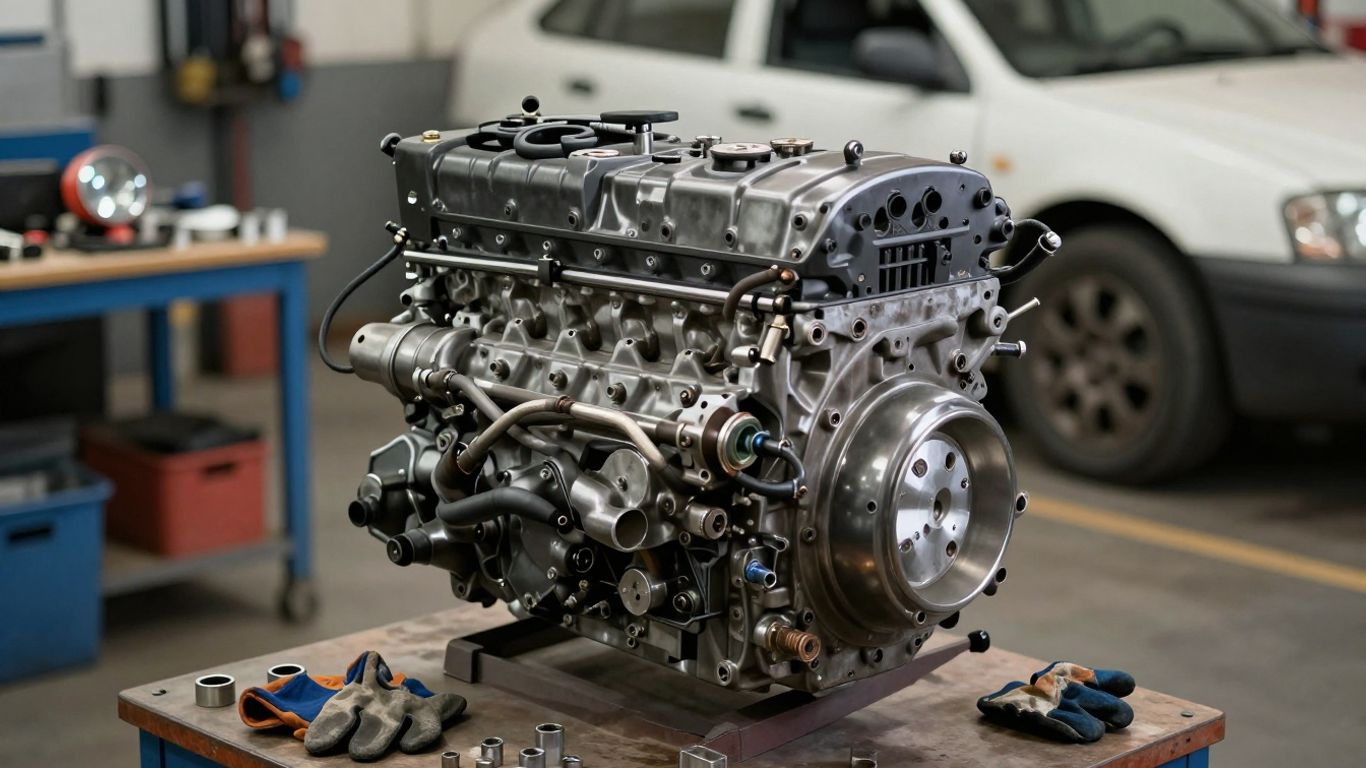
The following checks help prevent an apparently inexpensive purchase from becoming a conversion or modification project.
Confirming the model year and generation
Start with the registration details, build information, and exact model designation. A Forester, Impreza, Outback, Legacy, or WRX can have different engines across nearby model years, and a facelift may change important components. Do not rely on body styling or a seller’s broad model description when identifying the replacement.
Record the current engine’s visible markings and compare them with the vehicle documents. If the car has previously been modified or its engine has already been replaced, the original factory specification may not describe what is currently installed.
Comparing engine codes and specifications
The engine code is usually more useful than a general description such as “2.0-litre” or “turbo motor.” Compare the code, displacement, induction setup, cylinder-head arrangement, sensor locations, intake and exhaust connections, and accessory layout. Small differences can affect wiring, control modules, cooling plumbing, and installation time.
Ask for photographs of the identification markings and the engine as a whole. A written match should state whether the unit is intended as a direct replacement or whether parts from the existing engine must be transferred.
Checking transmission, drivetrain, and emissions compatibility
The replacement must work with the vehicle’s transmission and drivetrain arrangement, including the way the engine connects to the gearbox, mounts, sensors, and control systems. All-wheel-drive configurations can make compatibility especially sensitive because a mismatch may affect more than the engine bay. Emissions equipment and market-specific components should also be checked before purchase.
A seller or installer should be able to identify any included and excluded parts. If the quote assumes reuse of the original intake, exhaust, wiring, or accessories, that assumption should be stated rather than left to discovery during installation.
Using the vehicle identification number for verification
The vehicle identification number gives the seller and installer a consistent reference for confirming the car’s build and specification. Provide the full VIN, not only the model badge, and ask the seller to record the compatibility check on the quote or invoice. This creates a useful paper trail if questions arise later.
VIN verification does not replace inspection of the engine itself. It confirms the vehicle being matched, while the engine code, photographs, condition report, and warranty define what you are actually buying.
What to inspect before buying a used Subaru engine
A listing can provide a starting point, but it rarely answers every question that affects risk. Try to establish where the engine came from, how long it was stored, what testing was performed, and which components are included. If information is vague, allow for that uncertainty in both the price and your decision.
Inspection is easier when you separate identity, mechanical condition, and commercial protection. Each area answers a different question: is it the right engine, is it healthy enough to install, and what happens if it is not as described?
Mileage, service history, and donor vehicle details
Ask for the donor vehicle’s model, year, VIN or stock reference where available, recorded mileage, and reason for dismantling. A donor car damaged in a collision may provide useful context, while an engine removed after overheating needs more careful scrutiny. Service records, oil-change history, and storage conditions are valuable but may not always exist.
Mileage should be treated as one data point rather than a guarantee. Compare it with the donor vehicle’s condition and the seller’s explanation, and ask whether the stated figure is documented or estimated.
Compression testing and internal condition
Compression results can help identify uneven cylinder sealing, valve problems, or other internal concerns before installation. Ask whether the test was carried out on all cylinders and whether the readings are available. A compression test is useful, but it does not inspect every internal component or predict an exact remaining lifespan.
If practical, inspect the oil, coolant passages, spark-plug holes, seals, and visible bearing or timing areas for clues. A qualified mechanic can advise whether a further leak-down test or partial inspection is justified for the engine’s price and intended use.
Signs of overheating, oil leaks, or corrosion
Look for staining around the head-gasket area, brittle hoses, corrosion on alloy surfaces, damaged threads, and residue from old coolant or oil. These signs do not prove a fatal fault, but several together should prompt more questions. Check the crankshaft by hand only where appropriate and avoid forcing components that may be seized.
Storage matters as well. An engine kept exposed to moisture can develop corrosion even if the donor vehicle had a reasonable history, so ask how it was drained, sealed, and stored after removal.
Warranty coverage and return conditions
Read the warranty before paying, including its duration, covered parts, exclusions, labor provisions, and process for reporting a fault. Some arrangements require professional installation, documented fluids, or approval before disassembly. Clarify whether accessories, sensors, seals, and attached components are covered or excluded.
A clear return process is just as important as the headline warranty period. General guidance is useful here:
A warranty is strongest when the buyer understands the conditions before the engine is installed.
Keep the quote, photographs, test results, delivery record, and installation invoices together. Those documents make it easier to explain a problem and establish whether the agreed conditions were followed.
Finding used Subaru engines in Mandurah
Searching for used Subaru engines in Mandurah is easier when you approach local sellers, wreckers, and specialist suppliers with the same information. A clear request can produce a more accurate answer than a short message asking only for a price. Include the model, year, engine code if known, transmission, VIN, and whether you need pickup or delivery.
Local availability can change quickly, particularly for less common specifications. It is worth comparing not just advertised stock but also the seller’s ability to verify the engine and support the transaction after sale.
Comparing local sellers, wreckers, and specialist suppliers
A local wrecker may have donor-vehicle context and convenient pickup, while a specialist supplier may offer broader sourcing or more structured testing. These are general differences, not guarantees, so compare the actual documentation and terms attached to each engine. Ask whether the unit is physically in Mandurah, elsewhere in Western Australia, or available only after sourcing.
The best comparison keeps the engine identity constant. Looking at two quotes for different codes or different levels of included equipment can make a cheaper option appear better than it really is.
Questions to ask before requesting a quote
Prepare a short set of questions before asking for a final price: What is the engine code? What mileage is recorded? What testing was completed? What comes with the engine? Is the warranty written down? Can the seller verify compatibility using the VIN?
Also ask about collection hours, loading assistance, payment timing, delivery insurance, and the process for reporting damage. Direct questions do not guarantee a perfect engine, but they expose missing information before money and transport are committed.
Checking availability for popular Subaru models
Popular models may have more listings, but popularity does not remove the need to match the exact specification. Ask about the current stock of the relevant engine code rather than searching only by model name. If the correct unit is not available, find out whether the seller can source one and how long that may take.
For an urgent repair, confirm that “available” means identified and ready for sale, not merely a possible future dismantling. A realistic timeframe helps the workshop plan storage, hoist access, and installation.
Evaluating price against condition and warranty
A low advertised price may exclude manifolds, alternators, sensors, freight, or a meaningful warranty. Compare the total package: condition evidence, testing, included parts, return terms, delivery, and the likely labor required to prepare the engine. Three or more quotes can be useful when each quote describes the same specification.
| Comparison point | Why it matters | Question to ask |
|---|---|---|
| Engine identity | Prevents a costly mismatch | Is the code verified against my VIN? |
| Condition evidence | Indicates how much uncertainty remains | What testing and records are supplied? |
| Included parts | Changes preparation and labor time | Which accessories and sensors are attached? |
| Warranty and returns | Defines protection after installation | What steps apply if the engine is faulty? |
The table is a prompt for consistent comparison, not a scoring system. A slightly higher price may be reasonable when it buys better documentation, safer handling, or clearer support.
Choosing local pickup or engine delivery
Pickup and delivery can both work well when the engine is properly prepared and the handling plan is clear. Local collection may suit buyers who want to inspect the unit first, while delivery can save a trip when the engine is stored outside Mandurah. The right choice depends on equipment, timing, distance, and the seller’s transport arrangements.
Before committing, consider who will load the engine, how it will be secured, and where it will be stored at home or at the workshop. Heavy components need more planning than an ordinary parts collection.
Advantages of collecting an engine in Mandurah
Collecting locally can reduce waiting time and may allow you to inspect the engine, confirm the identification markings, and discuss included parts in person. It also avoids some freight uncertainty and can make it easier to resolve a question before the engine leaves the seller’s premises.
Pickup is not automatically cheaper. Include fuel, trailer hire, loading equipment, time away from work, and the risk of moving a heavy engine without suitable restraints.
Preparing a vehicle or trailer for safe pickup
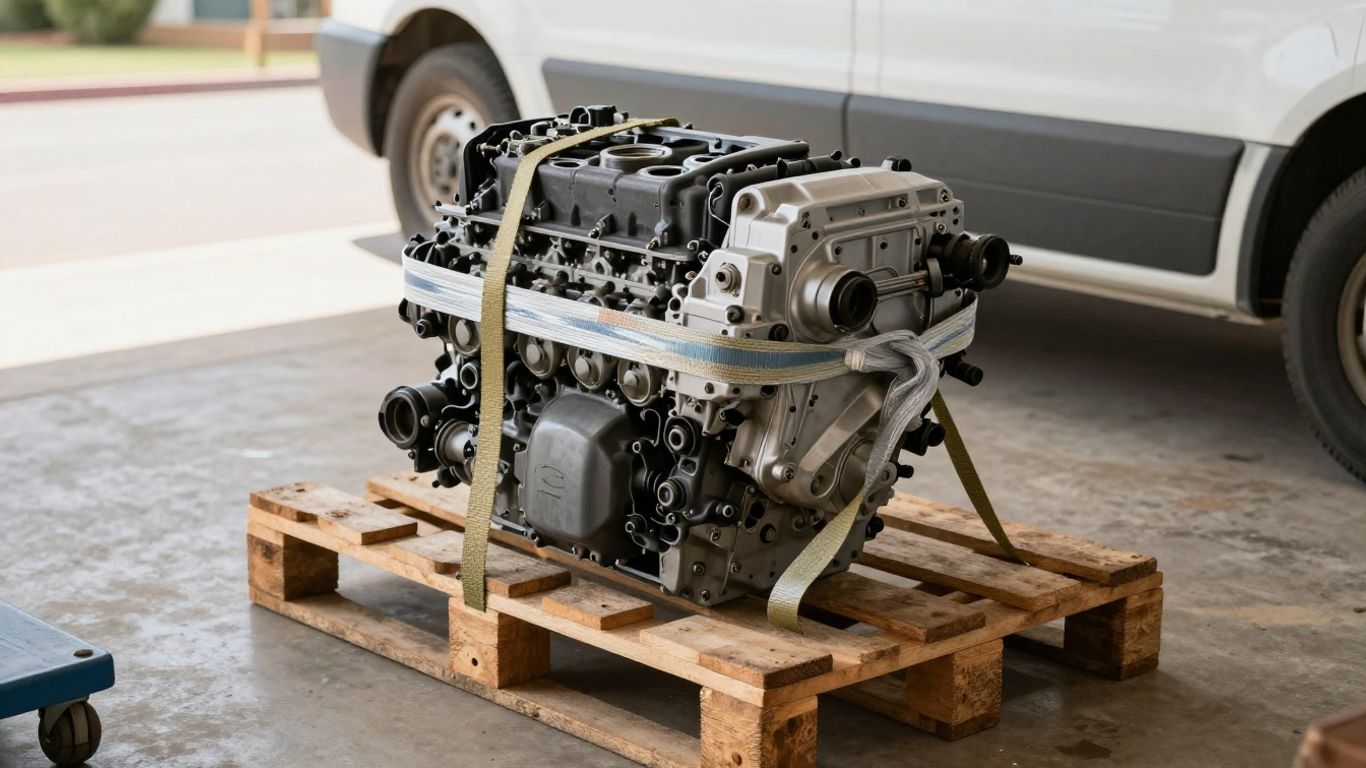
Use a suitable trailer or vehicle with a stable, level load area and enough capacity for the engine and any stand or pallet. Bring rated straps, protective covering, chocks, and equipment for controlled loading; do not rely on loose chains or improvised tie-down points. Confirm the seller’s loading method before arriving.
Keep the engine upright as recommended, protect exposed openings, and prevent it from shifting during the trip. A workshop may be able to advise on the safest arrangement if you are unfamiliar with transporting engines.
What to confirm about delivery to your address
Ask the seller which carrier will be used, whether the engine is palletised, how delivery is insured, and whether the driver will unload it. Check the exact address, access width, ground surface, delivery window, and whether a forklift or tail lift is required. Residential and workshop deliveries can have different requirements.
Request tracking details and confirm what happens if nobody is present. Clarifying these points early avoids a failed delivery, storage charge, or unsafe unloading situation.
Inspecting the engine when it arrives
Inspect the packaging before signing for delivery and photograph crushed corners, exposed components, leaks, or shifted restraints. Compare the engine with the invoice and the photographs supplied before it was shipped. If there is visible damage, record it with the carrier and seller immediately rather than opening a dispute after installation.
Once unpacked, keep the packaging until the engine has been checked. Verify the code, mounting points, accessories, and obvious condition, then arrange a qualified inspection before fitting it to the vehicle.
Planning the replacement and total cost
The engine is only one part of the replacement budget. Installation may involve fluids, seals, filters, belts, hoses, wiring checks, recovery, storage, and diagnosis of the original failure. A sensible estimate separates the purchase price from preparation and workshop labor so that a low headline figure does not hide the final cost.
Ask for a written scope before work begins. It should identify what is being replaced, what is being reused, and which uncertain items would require approval if discovered during installation.
Labor, fluids, seals, and installation parts
Labor depends on access, engine configuration, seized fasteners, transferred components, and the condition of the vehicle. Budget for engine oil, coolant, filters, gaskets, seals, and other consumables recommended by the installer. Some parts may be inexpensive individually but still add up when the engine is already removed.
The workshop should explain whether the quote is fixed, estimated, or subject to inspection. Ask how additional work will be authorised and whether the old engine will be retained for examination or disposal.
Additional components worth replacing during installation
With the engine accessible, it may be practical to inspect or replace timing components, belts, hoses, rear main seals, spark plugs, mounts, and worn accessory parts where appropriate. The right list depends on the engine and service history, so replacement should be based on condition and manufacturer requirements rather than an automatic bundle.
Preventive work can cost less during an engine swap than after everything has been reassembled. Even so, ask for separate prices so you can distinguish necessary repairs from sensible optional maintenance.
Programming, tuning, and post-installation checks
Some replacements require checks of sensors, wiring, control modules, immobiliser systems, and fault codes. The installer should confirm what programming or adaptation is needed for the particular vehicle and engine combination. Do not assume that a physically compatible engine will operate correctly without checking the vehicle’s control systems.
After startup, inspect for leaks, unusual noise, warning lights, unstable idle, cooling problems, and fluid contamination. A controlled road test followed by another inspection can identify issues before the vehicle returns to normal use.
How to compare complete quotes from installers
Request quotes that separate the used engine, freight or pickup, labor, installation parts, fluids, diagnostics, programming, taxes, and warranty-related conditions. Confirm whether the workshop or seller handles a failed replacement and whether labor is covered under any warranty. A quote that is easy to read is easier to compare and less likely to produce surprises.
Before approving the work, ask the installer to confirm the engine code and the expected result in writing. Then compare the total, timeframe, warranty, and assumptions—not just the first number on the page.
Conclusion
Used Subaru engines Mandurah – local pickup or delivery can be a practical route to repairing a valued vehicle when the engine is correctly matched, carefully inspected, and budgeted as part of a complete installation. Confirm the VIN and engine code, ask direct questions about condition and warranty, plan safe transport, and use a written workshop quote before committing. That preparation will not remove every risk, but it can make the replacement clearer, safer, and easier to manage.




