Key Takeaways
Buying second-hand Subaru Outback parts is easier when you confirm the vehicle details, compare total costs, and check the part before installation.
- Record the Outback’s model year, generation, trim, engine, and drivetrain.
- Ask wreckers about testing, condition, mileage, warranties, and returns.
- Match part numbers and VIN details before paying for a replacement.
- Include freight, fitting, removal, and possible refurbishment in the budget.
- Use a qualified technician for engines, transmissions, electrical systems, and safety-related parts.
Understand your Subaru Outback’s second-hand parts needs
A Subaru Outback can change substantially between model years, even when the body shape looks familiar. Before contacting a wrecker, identify the exact vehicle and the part that has failed. A few minutes spent gathering details can prevent an expensive mismatch and reduce back-and-forth calls.
Identify the model year, generation, and trim
Start with the build year, compliance date, generation, body style, and trim level. Note whether the vehicle is a wagon or another configuration, and record features such as a sunroof, powered tailgate, eyesight equipment, or a premium audio system where relevant. These details can affect panels, interior pieces, wiring, lights, and control modules.
The registration documents may provide some of this information, but the vehicle identification number is usually the most useful reference. Take clear photographs of the damaged part and its mounting points as well. A wrecker can use those details to search more accurately than a description such as “the rear light” or “the dashboard trim.”
Match engines, transmissions, and driveline components
Mechanical parts require closer matching than many cosmetic items. Confirm the engine designation, transmission type, drive configuration, and whether the replacement is intended for the same generation. Differences in sensors, wiring, mounting brackets, gear ratios, and electronic controls can make an apparently similar engine or gearbox unsuitable.
Ask for the donor vehicle’s details, recorded mileage, and any available testing or refurbishment information. For a used engine or transmission, clarify which accessories are included and which components will need to be transferred from the original unit. That distinction can materially change the labour involved.
Compare mechanical, electrical, and body-part requirements
Separate your shopping list into mechanical, electrical, body, and interior categories. Mechanical parts often need evidence of operation and wear, while body panels need careful attention to colour, dents, corrosion, and mounting tabs. Electrical components should be assessed for part numbers and communication requirements rather than appearance alone.
This approach also helps you decide whether a used part is sensible. A clean door mirror or trim panel may be a straightforward purchase, whereas a braking, steering, restraint, or engine-control component deserves more rigorous verification. The cheapest part is not always the cheapest repair once fitting and troubleshooting are included.
Check compatibility before contacting a wrecker
Write down the VIN, registration details, build date, engine code, transmission type, and the original part number if it is visible. Include left or right side, front or rear position, colour, and any useful photographs. If the part is already removed, photograph every connector, bracket, and label before discarding it.
A concise request gives the supplier enough information to check stock and provide a meaningful quote. It also makes it easier to compare two offers on the same basis, rather than comparing a complete assembly with a bare component.
Find reputable Subaru Outback wreckers in Toowoomba
Finding Subaru Outback wreckers Toowoomba – second hand parts is only the beginning; the supplier’s process matters just as much as the advertised price. A good wrecker should explain what is available, what has been checked, and what is covered after the sale. Local collection can be convenient, but delivery and broader sourcing may matter when a particular Outback variant is uncommon.
What to look for in a local auto wrecker
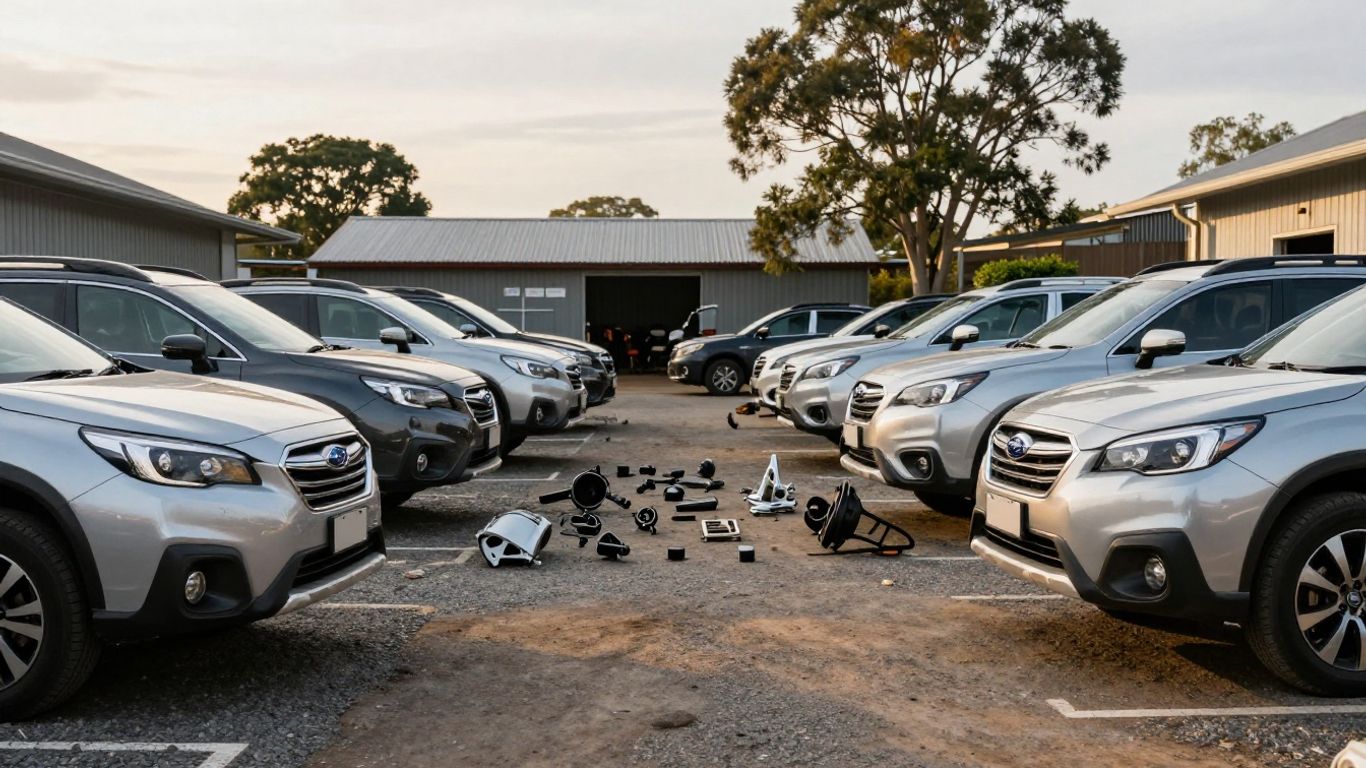
Look for clear descriptions, practical answers, and a willingness to confirm fitment before taking payment. A professional operation should be able to identify whether a part is used, refurbished, or new, and should explain its grading in plain language. Photos of the actual item are more useful than generic catalogue images.
South West 4WD Wreckers describes its Toowoomba operation as supplying used and refurbished parts, with second-hand items including panels, batteries, racks, and alternators. If you contact the business, ask it to confirm current availability rather than assuming an item shown online is still on the shelf.
When to choose a Toowoomba supplier or interstate provider
A Toowoomba supplier may be the practical choice when you need to inspect a panel, collect a bulky item, or avoid freight delays. An interstate provider can be worthwhile when the local stock does not match the vehicle or when a rare component needs a wider search. Compare the delivered price and expected arrival date, not just the advertised part price.
South West 4WD Wreckers states that it ships Australia-wide and can use a national network to help locate rare or discontinued parts. That documented sourcing option can be useful for an older Outback, although the final fitment still needs to be confirmed for the individual vehicle.
How vehicle sourcing affects part availability
Wrecker inventory changes as donor vehicles arrive and are dismantled. A part may be unavailable today but appear later from a matching vehicle, while a commonly requested item may sell quickly. Availability is also shaped by the condition of the donor car and by whether the supplier dismantles complete vehicles or sources through other yards.
Ask whether the quoted part is physically in stock, awaiting removal, or being located through another supplier. For a discontinued or unusual component, give the wrecker permission to suggest a compatible alternative only after the specifications have been checked.
Questions to ask about testing, grading, and warranties
Before agreeing to buy, ask how the part was tested, whether its mileage is known, and whether it has been repaired or refurbished. Confirm what the warranty covers, how long it lasts, and whether labour, freight, or diagnostic costs are excluded. Also ask how a return or exchange is handled if a qualified technician finds a fitment problem.
A short written record of the quote and warranty terms is useful. It prevents a verbal assumption about a complete assembly, included accessories, or return freight from becoming a dispute later.
Choose the right used Subaru Outback parts
Not every replacement should be sourced in the same way. Cosmetic items are often judged by appearance and fit, while mechanical and electronic parts call for evidence of operation and precise identification. The right choice balances original specifications, condition, availability, and the cost of fitting.
OEM parts versus aftermarket replacements
An original equipment part may offer the closest match for connectors, dimensions, finish, and factory systems. Aftermarket replacements can sometimes be appropriate, particularly for routine service items, but quality and fit vary between suppliers. Check whether the part is genuinely intended for your year and specification instead of relying on a broad “fits Subaru Outback” description.
For a used OEM component, ask whether it came from the same generation and whether any vehicle-specific programming is required. For an aftermarket item, review the warranty and installation requirements before comparing it with a dismantled original part.
Used engines, gearboxes, and drivetrain components
Large mechanical assemblies need a careful quote because “engine” or “transmission” can describe different levels of completeness. Confirm whether the price includes manifolds, sensors, starter motor, alternator, torque converter, transfer components, or other attached parts. Check the donor mileage and ask what testing was performed before removal.
Also budget for seals, fluids, filters, mounts, and any recommended service work while the assembly is accessible. A used unit can be a sensible option when its history and compatibility are clear, but a low purchase price should not obscure the preparation required before it goes into the vehicle.
Interior, exterior, and trim parts
Interior and exterior parts can offer good savings, especially when the original item is damaged but the surrounding systems remain sound. Match colour, upholstery, trim code, side, position, and equipment level. A door, seat, mirror, grille, or tailgate from a similar-looking Outback may still have different wiring, brackets, or sensor provisions.
Ask for photographs from several angles, including hidden mounting points. For painted panels, allow for colour variation caused by age and sunlight; a panel may need blending even when its factory colour code matches.
Sensors, electronics, and safety-related components
Sensors and control modules should be treated as specification-sensitive parts. Compare the identification label, connector shape, software or coding requirements, and the system in which the component operates. Appearance alone cannot show whether an electronic part will communicate correctly with the vehicle.
Be especially cautious with airbags, seatbelt components, steering controls, braking electronics, and driver-assistance equipment. Ask a qualified technician to confirm whether the item is suitable and whether calibration or fault-code checks will be required after installation.
Verify the condition and compatibility of second-hand parts
A part can look clean and still be wrong for the vehicle or too worn to justify installation. Verification should happen before payment wherever possible, using labels, photographs, donor information, and the VIN. These checks are particularly valuable when the part must be shipped and returning it will involve extra cost.
Inspect part numbers, identification codes, and labels
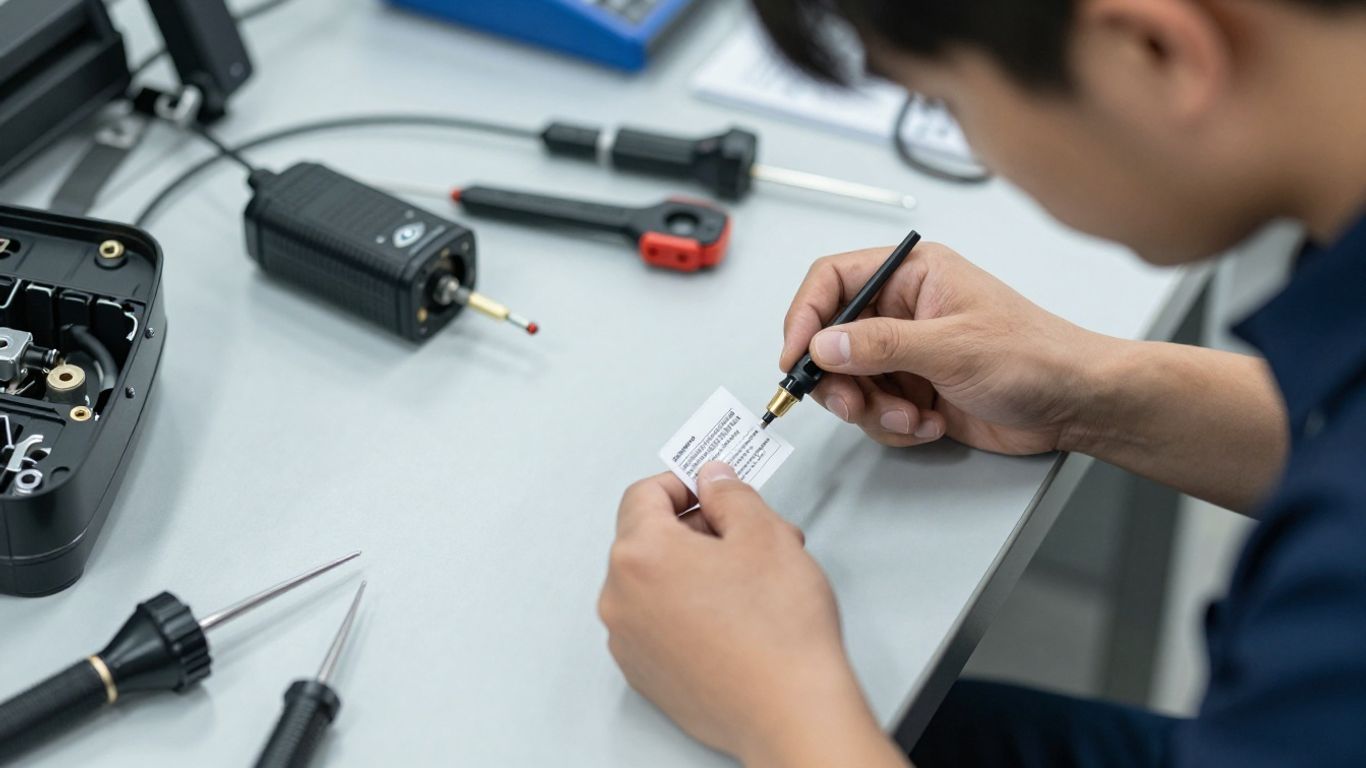
Read every available number on the original and replacement parts. Compare the main part number, suffix, revision, connector arrangement, and any casting or module code. A number that is nearly identical may indicate a different application, updated revision, or component that needs additional programming.
Ask the supplier to photograph the label if the item is not being inspected in person. Keep those images with the quote and your vehicle records so the technician can check them before installation.
Review mileage, wear, and refurbishment history
Mileage is useful context, but it is not a complete condition report. Ask whether the donor vehicle was running, whether the component was tested before removal, and whether there are known faults or visible wear. For refurbished items, request a clear explanation of what was replaced, measured, cleaned, or tested.
Inspect seals, connectors, threads, mounting points, bushings, and fluid contamination where accessible. A used part does not need to be perfect, but its known limitations should be reflected in the price and warranty.
Confirm fitment with the VIN and vehicle specifications
Give the supplier and installer the VIN rather than relying solely on the model name. Confirm the build date, engine, transmission, trim, body style, and relevant options. For electronic or safety-related components, ask whether coding, calibration, or post-installation diagnostics are needed.
A useful comparison table can keep the decision clear when several parts are offered:
| Check | Original part | Replacement part | Action |
|---|---|---|---|
| Main part number | Record label | Record label | Confirm exact match or approved supersession |
| Vehicle application | Note year and trim | Confirm donor details | Ask supplier to verify fitment |
| Condition | Photograph wear | Request testing history | Compare risk with warranty |
| Included items | List accessories | Confirm what is supplied | Price missing components separately |
The table is not a substitute for a technician’s assessment, but it exposes gaps before the part is paid for. If one column cannot be completed, pause the purchase and ask for clarification.
Recognize warning signs of unsuitable parts
Be wary of vague descriptions, missing photographs, unexplained price differences, or pressure to buy before fitment is checked. Other warning signs include damaged connectors, altered labels, heavy corrosion, broken mounting tabs, fluid leaks, and a warranty that is mentioned but not provided in writing.
A supplier may not know every detail of an old donor vehicle, but should be open about what is known and unknown. Honest uncertainty is easier to manage than an overconfident promise that the part will fit.
Compare prices and total replacement costs
Second-hand pricing is only one part of the repair calculation. The real cost may include freight, inspection, preparation, programming, installation, removal of the old component, and follow-up diagnosis. Comparing complete repair estimates gives a more accurate picture than comparing listings in isolation.
Factors that influence second-hand Subaru part prices
Price is affected by demand, rarity, donor mileage, condition, completeness, testing, refurbishment, and how quickly the part is needed. A painted panel with matching trim may cost more than an unpainted one, while a tested complete assembly may be better value than a cheaper bare unit.
Ask why two apparently similar parts differ in price. The explanation may be reasonable, such as a lower-mileage donor or a longer warranty, but it should be clear before you make the decision.
Include freight, installation, and removal charges
Freight can be significant for engines, transmissions, doors, bumpers, and glass. Confirm the delivery address, packaging, insurance, expected timing, and whether the item will arrive by a service suitable for its size. Local collection may reduce freight, but only if the item can be transported safely.
Get the installer to estimate removal, transfer of accessories, fluids, seals, programming, and testing. These details prevent a quoted part from becoming a much larger repair bill after the vehicle is already in the workshop.
Compare used, rebuilt, and new replacement options
A used part may provide the best balance for a cosmetic repair or a well-documented mechanical component. A rebuilt part may make sense when internal wear is a known concern, while a new replacement can be preferable for selected service, safety, or reliability-critical items. The right option depends on the vehicle’s value, expected ownership period, and risk tolerance.
Compare each option by total installed cost and warranty length. A more expensive component may be worthwhile if it reduces the chance of repeating labour, but a new part is not automatically the best choice for every repair.
Evaluate warranties, returns, and exchange policies
Read the warranty before ordering and check whether it applies to the part alone or to the complete repair. Clarify exclusions for overheating, incorrect installation, modified vehicles, labour, diagnostics, and transport. Find out whether the old unit must be returned and who pays for return freight.
A clear policy gives you a practical path if the part arrives damaged or proves incompatible. Keep the invoice, photos, packaging, and installation records until the replacement has been tested.
A reliable purchase is defined by fitment, condition, and clear terms—not by the lowest sticker price.
That principle is especially useful when the difference between two quotes is small. A documented test and workable return process may save more than a modest upfront discount.
Buy and install Subaru Outback parts with confidence
Once the part has been identified and priced, keep the final transaction orderly. Confirm exactly what is being supplied, how it will arrive, and what the installer needs before work begins. Good preparation reduces delays and gives you evidence if the delivered item differs from the quote.
Prepare the details needed for an accurate quote
Send the VIN, model year, build date, trim, engine and transmission details, part number, side or position, and photographs. Describe the symptom or damage without assuming the failed component; a technician may identify a related cause. State whether you need a complete assembly, a bare component, or accessories as well.
Ask for the quote in writing, including the part’s condition, mileage if known, included items, warranty, return terms, and freight. This makes it easier to approve the purchase and prevents an installer from receiving incomplete information.
Arrange delivery or local collection in Toowoomba
For local collection, inspect the part before loading it and check that labels, connectors, brackets, and included accessories match the agreement. Bring suitable transport for large or fragile components and ask how the supplier recommends securing them. Photograph the item and packaging before it leaves the yard.
For delivery, confirm who will receive the part and what to do if the packaging is damaged. Do not throw away boxes or wrapping until the part has been inspected and accepted by the workshop.
Use qualified technicians for complex installations
Engines, transmissions, driveline parts, restraint systems, braking electronics, and driver-assistance components should be installed by technicians with appropriate equipment and experience. They can check related faults, transfer required components, carry out coding or calibration, and identify problems that a simple visual inspection would miss.
Give the technician the supplier’s warranty terms before installation. Some warranties require particular fluids, procedures, diagnostics, or records, and ignoring those conditions can complicate a later claim.
Test the replacement part after installation
After installation, check for leaks, warning lights, unusual noises, vibration, poor operation, and loose trim or fasteners. For electrical parts, confirm that all connected functions work and that diagnostic faults have been cleared or properly explained. A road test should be carried out in suitable conditions, followed by a second inspection if the component affects steering, braking, or driveline operation.
Report any issue promptly and keep the technician’s notes, invoice, and test results. Completing these final checks gives you the best chance of resolving a problem within the supplier’s return or warranty process.
Conclusion
Reliable second-hand Subaru Outback parts come from careful identification, honest condition checks, and a full-cost comparison. Take the VIN and part numbers seriously, ask direct questions of wreckers in Toowoomba, and involve a qualified technician when the repair is complex. With that process, a used replacement can be a practical and well-informed repair choice.




