
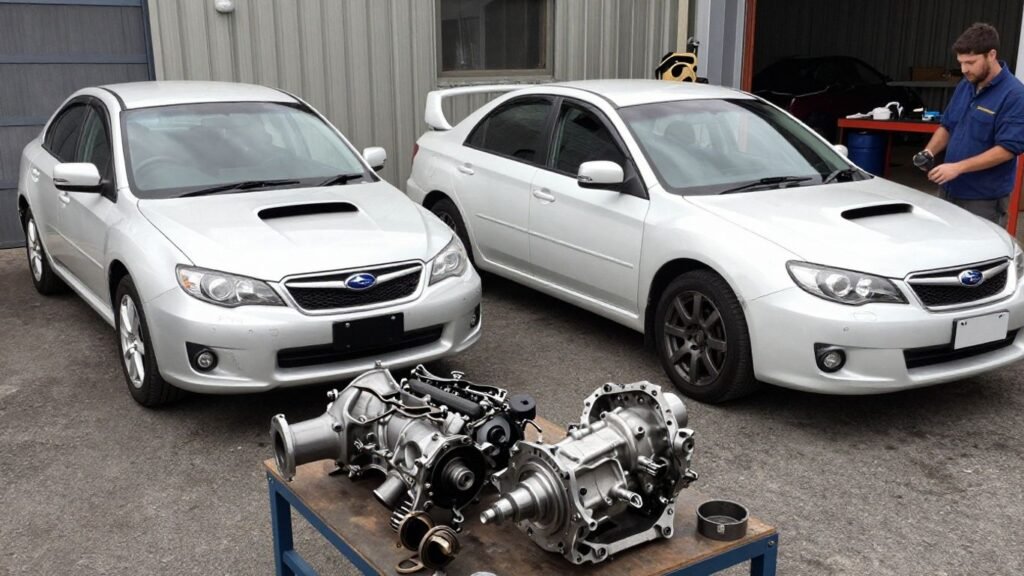
Key Takeaways
A careful match matters more than a quick bargain when sourcing a used Impreza engine or differential. The right checks can prevent expensive fitment and installation problems.
- Confirm the engine code, transmission details, and final-drive ratio before buying.
- Ask for mileage, donor condition, testing information, and included components.
- Inspect used differentials for noise, backlash, leaks, casing damage, and overheating.
- Compare the complete cost of the part, freight, removal, installation, and possible extras.
- Get fitment, warranty, returns, and core-charge terms in writing before payment.
Understanding Subaru Impreza engines and differentials
The Impreza has appeared across several generations, engine families, and drivetrain configurations. That variety makes a used part search more involved than simply matching the badge and body shape. Engines, gearboxes, and differentials need to work together as a system, so small specification differences can have serious consequences. A methodical comparison is the safest starting point.
Common Impreza engine types and generations
Impreza engines vary by generation, market, fuel system, aspiration, and engine code. Some cars use naturally aspirated flat-four engines, while performance-oriented variants use turbocharged versions with different supporting hardware and calibration. Record the exact model year, body style, transmission, and engine code before contacting a recycler. A photo of the identification plate and the existing engine can also reduce confusion.
A replacement that looks similar externally may still differ in sensors, mounting points, intake equipment, wiring, or emissions components. Treat the donor vehicle details as part of the part specification rather than as background information.
Open, limited-slip, and center differentials
A differential allows wheels on the same axle to rotate at different speeds while the vehicle corners. Open, limited-slip, and other drivetrain arrangements behave differently and are not automatically interchangeable. Impreza owners also need to distinguish between front, rear, and center differential requirements, particularly on all-wheel-drive models.
The correct unit depends on the complete driveline, not only the housing shape. If a vehicle has been modified, changed from its original transmission, or fitted with different wheels and tyres, those details should be disclosed before a part is selected.
How model year affects parts compatibility
Model-year changes can affect mounting, electronics, sensors, gearing, cooling connections, and control systems. Even when two Imprezas share a broad engine family, their ancillary equipment or transmission pairing may differ. Use the vehicle identification number, build information, engine code, and transmission code together when checking compatibility.
Exact identification saves money because it narrows the search before freight or workshop time is committed. It is also worth checking whether the proposed replacement is a complete assembly or a long block that requires parts from the original vehicle.
Why turbo and non-turbo components differ
Turbocharged and non-turbo engines can differ in compression, pistons, heads, intake and exhaust arrangements, oil plumbing, cooling demands, and engine management. Their differentials and transmissions may also reflect different torque outputs and ratios. A turbo engine should not be treated as a straightforward upgrade or substitute for a naturally aspirated unit.
Ask the recycler to confirm the donor specification rather than relying on a listing photograph. If the car has aftermarket modifications, provide those details to the workshop and seller so the replacement can be assessed in context.
Choosing the right Subaru Impreza wreckers in Launceston
Finding Subaru Impreza wreckers Launceston – engines & diffs is only the first step in a successful purchase. The recycler should be able to identify the donor vehicle and explain what was checked before the part was listed. Local access can simplify inspection and collection, while interstate sourcing may widen the available inventory. Either way, clear questions and documented terms protect the buyer.
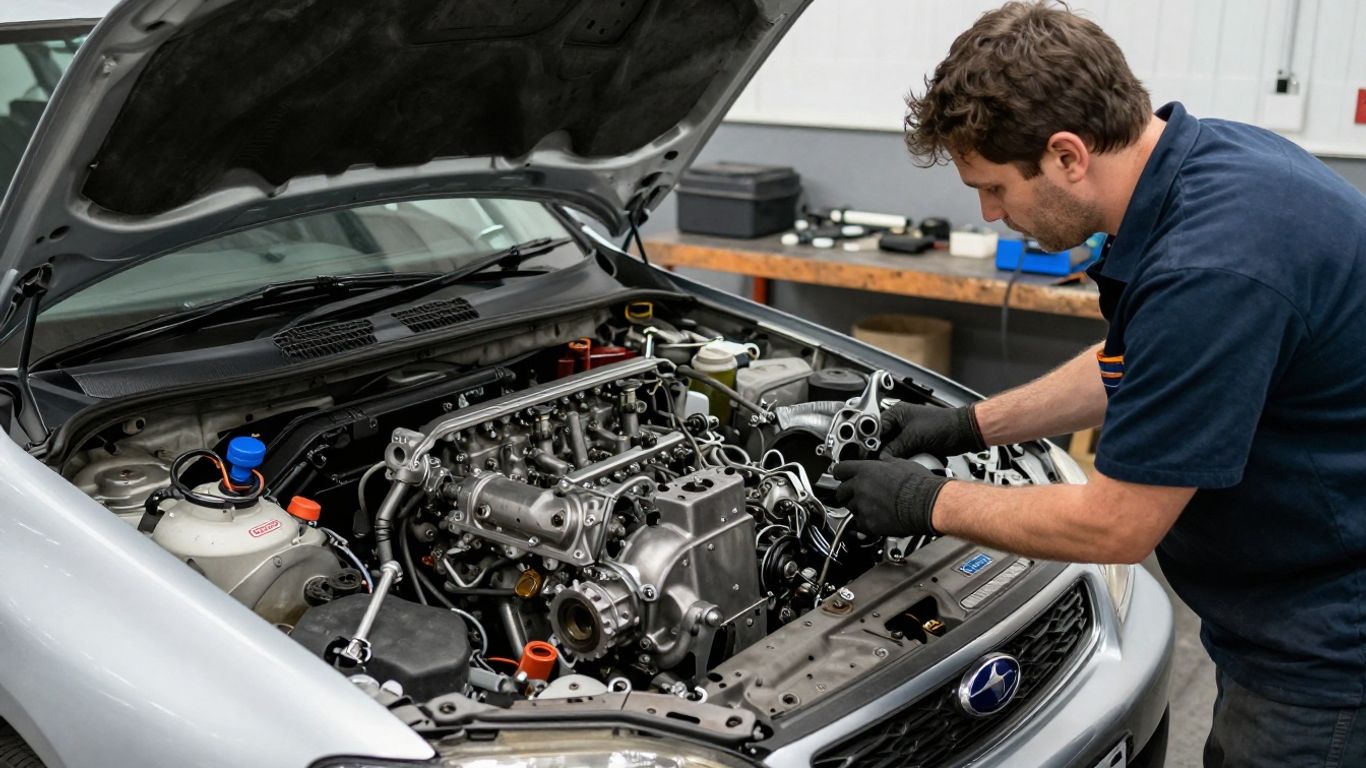
What to look for in a reputable recycler
A reputable recycler should give specific information rather than vague assurances. Ask for the donor year, model, engine or differential code, recorded mileage where available, testing performed, visible faults, and the condition of attached components. Clear photographs of casting numbers, plugs, seals, and mounting points are useful when an in-person inspection is not possible.
The quality of the answer is often revealing. A seller who can separate confirmed information from an estimate is easier to deal with than one who promises compatibility without checking the vehicle details.
Local inventory versus interstate sourcing
Local inventory may allow you to inspect a component, avoid long freight delays, and discuss fitment with a nearby workshop. Interstate sourcing can offer more donor vehicles when a particular generation, ratio, or engine code is uncommon in the Launceston area. Freight packaging, insurance, and return logistics become more important as distance increases.
Before choosing between local and interstate stock, compare the delivered price and timing rather than the advertised part price alone. A cheaper component can lose its advantage if it requires urgent freight or is difficult to return.
Questions to ask before requesting a part
A short, detailed enquiry usually gets a more useful response than a request for “an Impreza engine.” Include the VIN, year, model variant, transmission type, engine code if known, drivetrain symptoms, and whether the vehicle is standard or modified. For a differential, add the axle position and any known final-drive information.
Ask whether the part is tested, what accessories are included, how mileage was established, and whether the quoted price includes freight. It is also sensible to ask how damage in transit is handled before money changes hands.
When recycled parts are better than aftermarket options
A recycled original-equipment component can be a practical choice when the replacement needs to match factory mounting, sensors, housings, and drivetrain geometry. It may also preserve the specification of a less common vehicle without requiring adaptations. Aftermarket parts can still be suitable, but their quality, design, and included equipment need separate evaluation.
The better option is the one that fits the vehicle and the repair plan with the fewest unknowns. Discuss both choices with the installer, especially when labour to modify or transfer components could outweigh a lower purchase price.
Finding a suitable used Impreza engine
An engine purchase involves more than finding a unit with the same number of cylinders. Internal condition, donor history, included equipment, and installation requirements all affect the real value. Start with the failed engine’s symptoms and the vehicle’s exact specification, then compare that information with the proposed donor. This approach reduces the risk of receiving a technically plausible but unsuitable assembly.
Matching the engine code and vehicle specifications
Engine-code matching should be the first technical check. Confirm the code, model year, transmission pairing, intake and exhaust arrangement, sensors, engine management, and emissions equipment. If the replacement is supplied without accessories, establish which original parts can be transferred and whether they are known to be serviceable.
Do not assume that a family resemblance guarantees a direct fit. A workshop can identify the changes needed, but those changes should be known before the price is accepted.
Checking mileage, service history, and donor condition
Mileage is useful, but it is only one indicator of condition. Ask whether the odometer reading is documented, how the donor vehicle was running before dismantling, and whether the engine came from a collision-damaged car or one with mechanical failure. Service records, oil-change evidence, and details of previous overheating can be more informative than a low number alone.
A donor inspection should also consider contamination, missing components, damaged connectors, and long-term storage. The more complete the history, the easier it is to judge the risk of installation.
Evaluating compression, leaks, and visible wear
If testing information is available, request compression results and ask whether they were taken consistently across all cylinders. Look for oil or coolant leaks, damaged threads, corrosion, cracked housings, worn pulleys, and signs of overheating. A visual inspection cannot reveal every internal fault, but it can identify reasons to pause or negotiate.
Compression figures should be interpreted alongside the test method and engine condition. If the unit is sold without meaningful testing, allow for additional inspection or possible refurbishment rather than treating it as equivalent to a tested engine.
Understanding what is included with a replacement engine
“Engine” can mean different things in different listings. One supplier may provide a long block, while another may include manifolds, turbo equipment, injectors, wiring, sensors, starter, alternator, or other accessories. Ask for a written inventory and compare it with the components being removed from the vehicle.
The installer should also identify normal replacement items such as seals, belts, fluids, filters, and gaskets. Clarifying these details prevents a low headline price from becoming an incomplete repair package.
Selecting and inspecting a used differential
Differential faults can sound similar to wheel-bearing, axle, gearbox, or tyre problems, so diagnosis should precede replacement. Once the failed unit is identified, the key checks are ratio, position, housing, condition, and compatibility with the rest of the drivetrain. A clean-looking casing does not prove that the gears and bearings are healthy. Inspection and documentation matter.
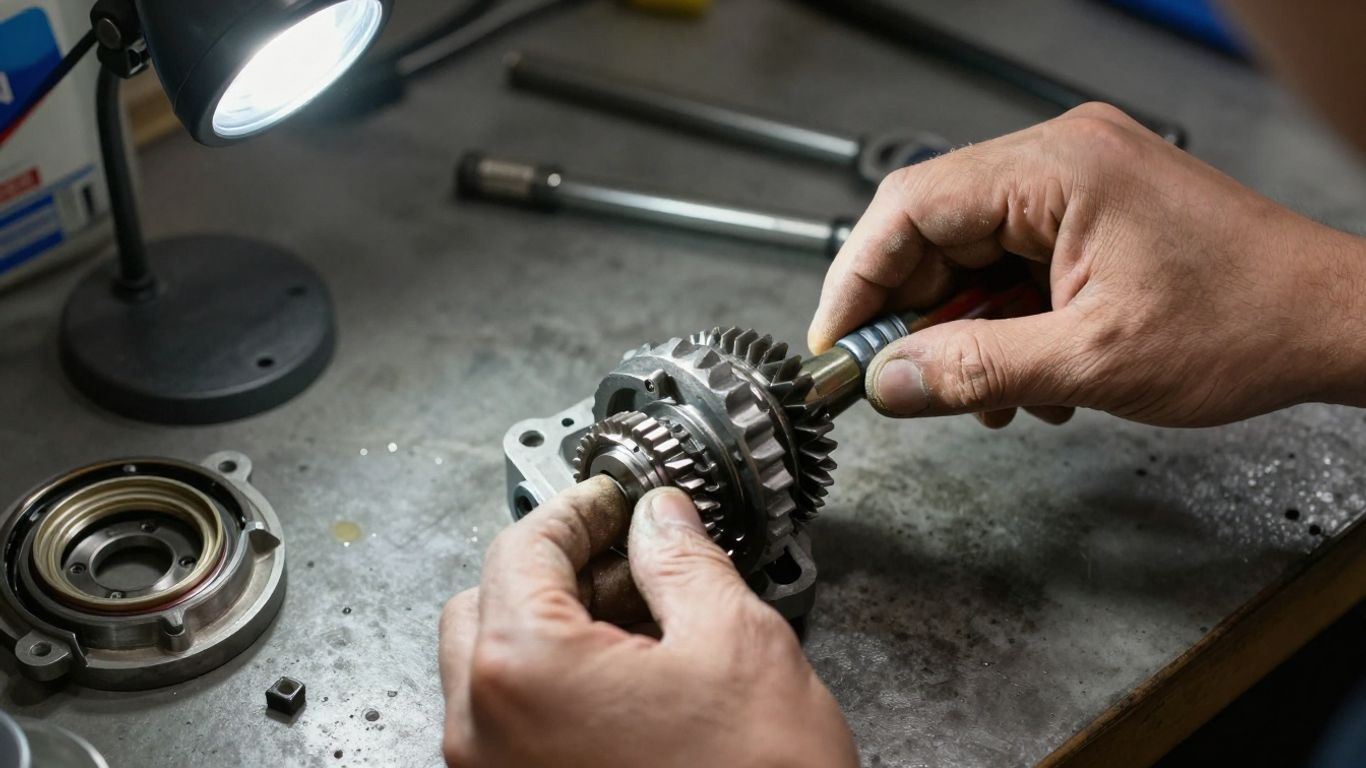
Confirming the correct final-drive ratio
The final-drive ratio determines how engine speed is converted into wheel speed and must correspond with the transmission and other driven axles. An incorrect ratio in an all-wheel-drive system can create driveline stress and poor operation. Confirm the ratio from the vehicle specification, identification markings, or a reliable workshop measurement rather than guessing from the model name.
If the vehicle has a replacement transmission, altered gearing, or other drivetrain work, the original factory ratio may no longer be the correct assumption. Make the complete modification history part of the enquiry.
Matching front, rear, and center differential requirements
Front, rear, and center units occupy different positions and perform different jobs. Their housings, splines, mounting arrangements, and internal designs can vary even within the same generation. State the required position clearly and provide the transmission details when asking for a quote.
A center differential concern may actually involve the transmission or associated control system, so diagnosis is especially valuable before ordering. The replacement must match the vehicle’s complete all-wheel-drive arrangement.
Checking backlash, noise, seals, and casing damage
A used differential should be checked for excessive backlash, rough bearings, chipped or worn teeth, damaged splines, leaking seals, and cracks around mounting points. Rotate the input and output components where possible and listen for roughness or abnormal resistance. Photographs can help, but hands-on assessment gives a much stronger indication of mechanical condition.
A matching part number is a starting point, not proof that a used drivetrain component is healthy.
After the basic inspection, ask what testing was performed and whether the seller will stand behind the result. That evidence helps distinguish a carefully assessed unit from one being sold only on appearance.
Identifying signs of overheating or poor maintenance
Burnt or unusually dark oil, discoloured metal, damaged seals, sludge, and heat-marked gears can point to overheating or neglected maintenance. These signs do not always establish the exact failure, but they justify further questions about the donor vehicle. Check for water entry, corrosion, and casing damage as well, particularly if the donor was exposed to weather or collision forces.
A differential with an uncertain history may still be usable, but its price should reflect the risk and the potential cost of rebuilding. If inspection is limited, a written warranty becomes more valuable.
Comparing costs for engines, diffs, and installation
The purchase price is only one part of a used-part repair. Engines and differentials can require freight, fluids, seals, specialist diagnosis, accessory transfers, and extra labour before the vehicle is ready to drive. Comparing complete repair estimates gives a more honest view of value. It also makes it easier to decide whether a tested component is worth more than an unverified bargain.
Factors that influence recycled-part pricing
Pricing reflects rarity, demand, mileage, testing, completeness, warranty coverage, and the condition of the donor vehicle. A complete engine with documented testing may cost more than an as-is long block, while a less common differential ratio can command a premium. Local availability, storage time, and freight requirements can also influence the final quote.
Compare like with like. A bare assembly and a dressed, tested assembly should not be placed in the same price column without adjusting for the parts and labour still required.
Estimating removal, shipping, and installation costs
Request a workshop estimate that separates removal, inspection, installation, fluids, seals, programming, and post-fitment testing. Add freight, packaging, insurance, and any return transport to the recycler’s price. For an engine, include the time needed to transfer usable accessories; for a differential, include oil service and any required adjustment.
A simple cost table can make hidden differences easier to see. The figures will vary by vehicle and workshop, but the categories remain useful when comparing quotes.
| Cost area | Engine replacement | Differential replacement |
|---|---|---|
| Part and testing | Donor specification and engine condition | Ratio, position, and gear condition |
| Freight and handling | Packaging, weight, and insurance | Packaging, weight, and insurance |
| Workshop labour | Removal, transfers, fitting, and checks | Diagnosis, removal, fitting, and adjustment |
| Consumables and extras | Fluids, seals, belts, and filters | Oil, seals, and related hardware |
The table is a prompt for a complete estimate, not a fixed price guide. Ask the workshop to identify which items are included and which could arise after inspection.
Comparing tested, warranted, and as-is components
A tested part has evidence of a check, but the scope of that check should be clear. A warranty may cover the component for a stated period while excluding labour, accessories, overheating, incorrect installation, or continued use after a fault appears. An as-is part may be cheaper, but the buyer carries more uncertainty.
Read the terms before comparing prices. A modest premium for documented testing and practical warranty coverage can be sensible when installation is expensive.
Calculating whether repair or replacement makes sense
Compare the replacement pathway with rebuilding the original unit, using a workshop diagnosis rather than a guess. Include machine work, internal parts, specialist labour, downtime, and the likelihood of other age-related failures. For an older vehicle, also consider its overall condition and whether the repair restores a dependable car or only addresses one problem.
The best decision is not always the cheapest invoice. It is the option with a reasonable balance of fitment certainty, condition, warranty, labour exposure, and expected service life.
Buying and fitting Subaru Impreza parts with confidence
A good purchase continues through fitment and post-installation checks. Written details create a shared reference for the recycler, buyer, and workshop, especially when several engine or drivetrain variations look similar. Keep the original diagnostic information and all correspondence with the part records. Clear preparation makes disputes less likely and installation more orderly.
Providing the vehicle identification number and part details
Supply the VIN, model year, body style, transmission, engine code, drivetrain position, and any relevant casting or identification numbers. Describe symptoms accurately, including when the noise, leak, misfire, or vibration occurs. Mention modifications, previous replacement units, and non-standard wheels or tyres.
Photos of the vehicle plate, existing component, connectors, and mounting points can support the written information. More detail at the enquiry stage generally means fewer assumptions later.
Verifying fitment before payment
Ask the seller to confirm fitment against the supplied vehicle details in writing. Check whether the quoted unit is complete, whether accessories must be transferred, and whether programming or calibration is required. If the seller cannot confirm a match, pause and have a Subaru-aware workshop compare the specifications.
Do not rely solely on a photograph or a broad catalogue description. A final check before payment is far cheaper than freight, removal, and a failed installation.
Understanding warranties, returns, and core charges
Read the warranty duration, exclusions, claim process, and responsibility for labour or freight. Confirm the return window and whether the part must remain unmodified for a claim to remain valid. A core charge may apply when the original engine or differential is retained by the seller, so establish when and how it is refunded.
Keep invoices, photographs at delivery, and installation records. If damage or a discrepancy is found, notify the seller promptly and follow the stated process rather than dismantling or altering the part without permission.
Preparing for installation and post-fitment checks
Before fitting, compare the replacement with the original and inspect connectors, mounts, seals, and accessible surfaces. Replace appropriate fluids, filters, gaskets, and seals, and follow the workshop’s procedure for priming or adjustment. Once installed, check for leaks, warning lights, abnormal noise, vibration, temperature changes, and correct drivetrain operation.
A controlled road test followed by another inspection can catch problems early. Keep the vehicle’s records updated with the donor details, mileage, work completed, and any warranty documentation.
Conclusion
A used Impreza engine or differential can be a practical repair when its code, ratio, condition, fitment, and warranty are carefully verified. By comparing the complete installed cost and working with a recycler who provides clear donor information, buyers can approach Subaru Impreza wreckers in Launceston with fewer surprises and a much better chance of a sound result.




