
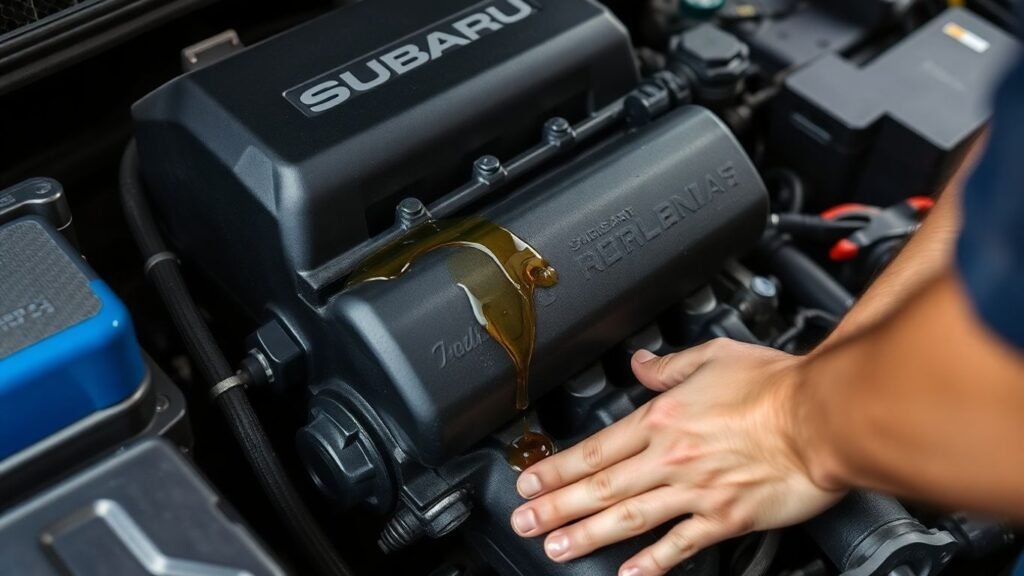
So, you’ve noticed some oil spots under your Subaru, huh? It’s a bummer, I know. It’s not just about cleaning up a mess; it could mean something more serious is going on with your engine. We’re going to break down what those Subaru oil leak solutions really involve, from figuring out where the leak is coming from to fixing it and, hopefully, stopping it from happening again. Let’s get your Subaru back to running smoothly.
Key Takeaways
- Keep an eye out for oil spots under your car, burning smells, or a low oil level – these are the first signs of a Subaru oil leak.
- Common culprits for leaks include worn-out valve cover gaskets, oil filter housings, and rear main seals. Sometimes it’s just a loose bolt.
- Fixing minor leaks often means replacing gaskets or seals, while bigger issues like a damaged oil pan might need more involved repairs.
- Regular oil changes and routine checks are your best defense against future oil leaks, helping to keep seals and gaskets in good shape.
- Don’t ignore oil leaks; they can lead to bigger, more expensive engine problems and even safety issues if left untreated.
Understanding Subaru Oil Leak Solutions
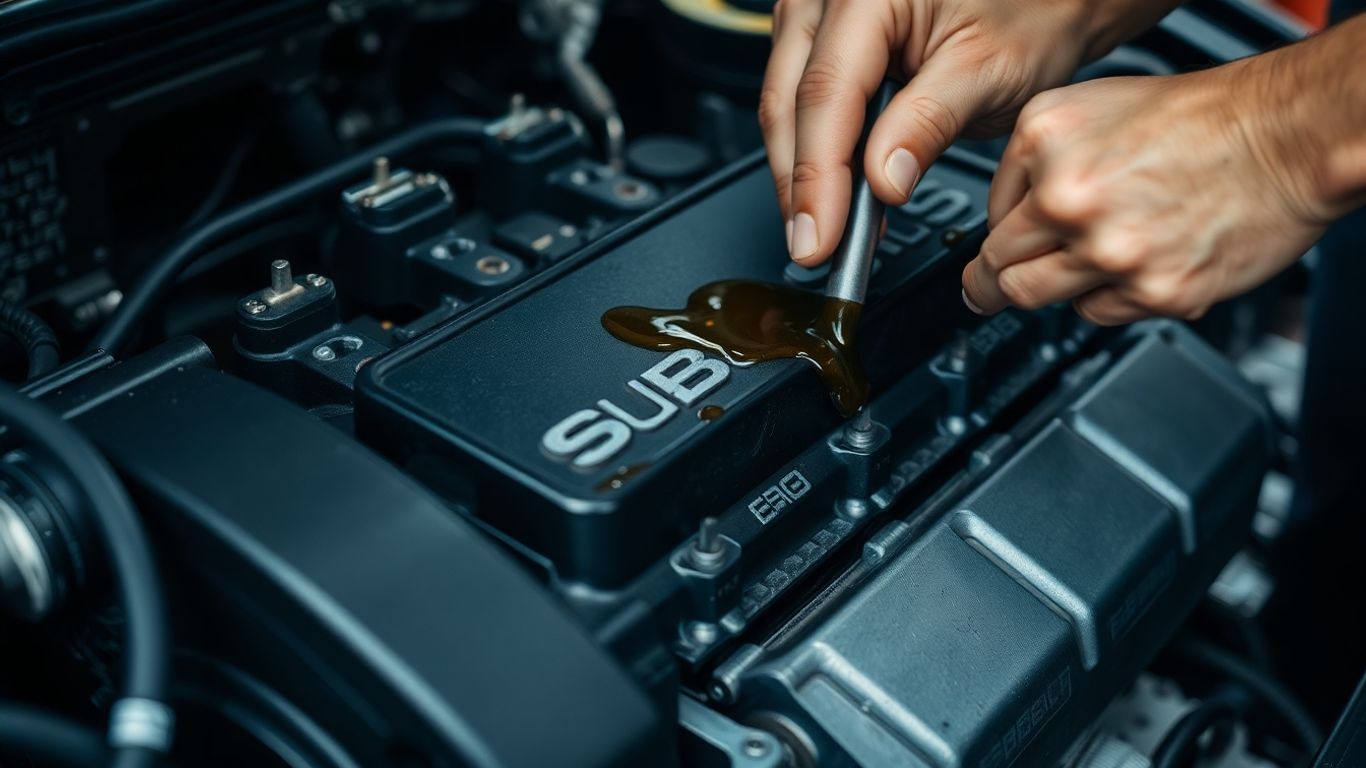
So, you’ve noticed a little something extra under your Subaru after it’s been parked for a while? That tell-tale drip or even just a suspicious sheen on the driveway can be a bit unsettling. It’s important to figure out what’s going on before it becomes a bigger headache. Subaru engines, known for their boxer design, can sometimes develop oil leaks, and understanding the common culprits is the first step to getting things sorted.
Recognizing The Signs Of An Oil Leak
Spotting an oil leak isn’t always as obvious as a big puddle. Sometimes it’s just a faint smell of burning oil when you’re driving, or you might notice the oil level on your dipstick dropping faster than it should. You could also see a dark, oily film on the engine or undercarriage. It’s not just about the mess; these signs mean your engine is losing a vital fluid.
Common Causes Of Subaru Oil Leaks
Several things can cause oil to escape your Subaru’s engine. The most frequent offenders are often the gaskets and seals. Think of them like the seals on a jar – they keep things contained. Over time, heat and wear can make these gaskets brittle or cracked. Valve cover gaskets, oil pan gaskets, and the rear main seal are common areas where this happens. Sometimes, the oil filter housing or cooler adapter can also develop leaks. It’s not always a catastrophic failure, but these components do wear out.
The Risks Of Ignoring Oil Leaks
Letting an oil leak go unchecked is like ignoring a small cut that gets infected. Initially, it might seem minor, but it can lead to serious problems down the road. Low oil levels mean your engine’s moving parts aren’t getting enough lubrication, leading to increased friction and heat. This can cause premature wear on engine components, potentially leading to expensive repairs like a blown engine. Plus, oil dripping onto hot exhaust parts can create a fire hazard. It’s definitely not something to put off.
It’s easy to think a little oil loss isn’t a big deal, especially if it’s not leaving a huge mess. But engines need a consistent amount of oil to keep everything running smoothly. When that level drops, even a bit, the stress on the engine goes up. Think of it like not drinking enough water on a hot day – you might be okay for a while, but eventually, you’ll feel the effects, and so will your engine.
| Component | Typical Issue |
|---|---|
| Valve Cover Gaskets | Cracking or hardening over time |
| Oil Pan Gasket | Gasket degradation or pan damage |
| Rear Main Seal | Wear and tear, especially at higher mileage |
| Oil Filter Housing | Gasket failure or cracks in the housing |
| Oil Cooler Adapter | Seal degradation or cracks |
Diagnosing The Source Of Subaru Oil Leaks
Alright, so you’ve noticed a drip or a strange smell, and you’re thinking, ‘Uh oh, oil leak.’ The first thing to do is not panic. Pinpointing where that oil is coming from is the key to fixing it right.
Initial Inspection And Oil Level Checks
Before you get too worried, let’s start with the basics. Pop the hood and check your oil level. Is it significantly low? If it’s just a little bit low, it might be normal oil consumption for your Subaru, especially if it’s an older model. Sometimes what looks like a leak is actually just some oil blow-by. You’ll want to look underneath the car for any fresh oil spots. If you see them, try to get a general idea of where they’re coming from. Is it more towards the front, middle, or back of the engine? Also, check the oil dipstick and the oil filler cap. If the oil looks milky or foamy, that could point to a coolant leak mixing with the oil, which is a different, more serious issue, often related to head gaskets.
Advanced Diagnostic Techniques
If the basic checks don’t reveal the culprit, it’s time to get a bit more hands-on. Sometimes, a mechanic will use a UV dye. They add a special fluorescent dye to your oil, run the engine for a bit, and then use a UV light to find exactly where the dye is leaking out. It’s pretty effective for finding even small seeps. Another method is to clean the engine thoroughly and then run it. Any new oil that appears on a clean surface is a strong indicator of the leak’s origin. You can also sometimes tell by the location of the oil residue. For example, oil dripping down the back of the engine might suggest a rear main seal issue, while oil around the top could mean valve cover gaskets.
When To Seek Professional Diagnosis
Look, sometimes you just don’t have the tools or the time to figure this stuff out yourself. If you’ve checked the oil level and can’t see any obvious drips, or if you suspect a more complex problem like a head gasket leak, it’s probably best to let a Subaru specialist take a look. They have the experience and equipment to properly diagnose the issue without causing more problems. Trying to guess can lead to replacing the wrong parts, which is just a waste of money and time. If you’re seeing smoke from the exhaust, or if your engine is overheating, definitely get it to a shop right away.
It’s easy to get overwhelmed by the possibilities when diagnosing an oil leak. Start with the simple things like checking the oil level and looking for obvious drips. If that doesn’t help, consider using a UV dye or cleaning the engine to make the leak more visible. Don’t hesitate to call in a professional if you’re unsure or if the problem seems serious. They can save you a lot of headaches and potentially prevent further damage to your Subaru.
Effective Repair Solutions For Subaru Oil Leaks
So, you’ve found an oil leak on your Subaru. Don’t panic just yet. Many oil leaks, especially on Subarus, can be fixed without breaking the bank, but it really depends on where the oil is coming from and how bad it is.
Addressing Minor Leaks With Gasket And Seal Replacement
Often, those little drips you see aren’t the end of the world. They usually come from worn-out gaskets or seals. Think of valve cover gaskets, oil filter housing seals, or even the front and rear crankshaft seals. These are pretty common culprits on Subarus as they age. Replacing these parts is usually a straightforward job for a mechanic. It involves removing the offending part, cleaning the mating surfaces really well, and then installing a new gasket or seal. The key here is meticulous cleaning and proper torqueing of bolts to prevent future leaks. Sometimes, a mechanic might suggest replacing a few seals and gaskets at once if they’re in the same general area, especially if you’re already doing something like a timing belt job, which saves on labor costs.
Resolving Major Leaks From Oil Pans And Seals
Now, if the leak is more serious, like from the oil pan itself or a major seal like the rear main seal, the repair gets a bit more involved. An oil pan leak might just need a new gasket, but sometimes the pan itself can get damaged or corroded. Replacing the rear main seal often means the transmission has to come out, which is a much bigger job and, naturally, more expensive. These are the kinds of repairs where you really want to make sure you’re getting quality parts and good workmanship. It’s not uncommon for mechanics to recommend a thorough inspection of related components while they’re in there, like checking the clutch if the transmission is out.
Temporary Fixes Versus Permanent Repairs
Look, sometimes you just need to buy a little time. Maybe you’ve got a big trip planned or you’re saving up for the full repair. There are some temporary fixes out there, like certain sealants or even some types of tape, but honestly, they’re usually just that – temporary. They might stop a small drip for a while, but they rarely hold up long-term, especially with the heat and pressure inside an engine. It’s almost always better to go for a permanent repair using the correct gaskets and seals. Trying to patch up a serious leak can sometimes lead to bigger problems down the road, like oil getting into other parts of the engine or causing more damage. It’s usually worth the investment to get it fixed right the first time.
When dealing with oil leaks, especially on older vehicles, it’s easy to get caught up in the cost. However, ignoring a leak, even a small one, can lead to low oil levels, potentially causing severe engine damage. It’s a balance between immediate expense and the much larger cost of a blown engine. Always get a clear diagnosis and understand the implications of delaying a repair.
Preventative Maintenance For Subaru Oil Leaks
Taking good care of your Subaru can really help keep those pesky oil leaks at bay. It’s not just about fixing things when they go wrong; it’s about stopping them from going wrong in the first place. Think of it like regular check-ups for yourself – they catch little things before they become big problems.
The Importance Of Regular Oil Changes
This is probably the most basic, yet most important, thing you can do. When you change your oil on schedule, you’re not just getting rid of old, dirty oil. You’re also getting rid of tiny metal particles and other gunk that can build up over time. These bits can clog up oil passages or even start to wear down seals and gaskets. Sticking to Subaru’s recommended oil change intervals, usually found in your owner’s manual, is a solid move. For many Subarus, this means every 5,000 to 7,500 miles, but always check your specific model. Skipping oil changes is like asking for trouble down the road, and it can definitely contribute to leaks.
Routine Inspections For Early Detection
Beyond just the oil change itself, make it a habit to look around under the hood and under the car. When you’re getting your oil changed, ask the mechanic to give it a quick once-over. Look for any wet spots, especially around the engine, oil pan, and filter. Even a small amount of oil residue can be an early warning sign. Catching a small seep now can save you a lot of money and hassle later. Sometimes, a leak might not be obvious from just looking; you might not see drips on your driveway. That’s why a good visual inspection during routine service is so helpful. It’s about being proactive.
Using The Correct Oil For Your Subaru
Subaru engines are a bit particular about their oil. Using the wrong type or weight of oil can cause problems. The manufacturer specifies a certain viscosity (like 0W-20 or 5W-30) and type (synthetic or conventional) for a reason. The wrong oil might not lubricate properly, or it could even be too thin and find its way past seals that a thicker oil would keep in place. Always refer to your owner’s manual for the exact oil specifications for your Subaru model and year. Using the recommended oil helps maintain proper oil pressure and flow, which is key to keeping all those seals and gaskets happy and leak-free.
Common Subaru Components Prone To Leaks
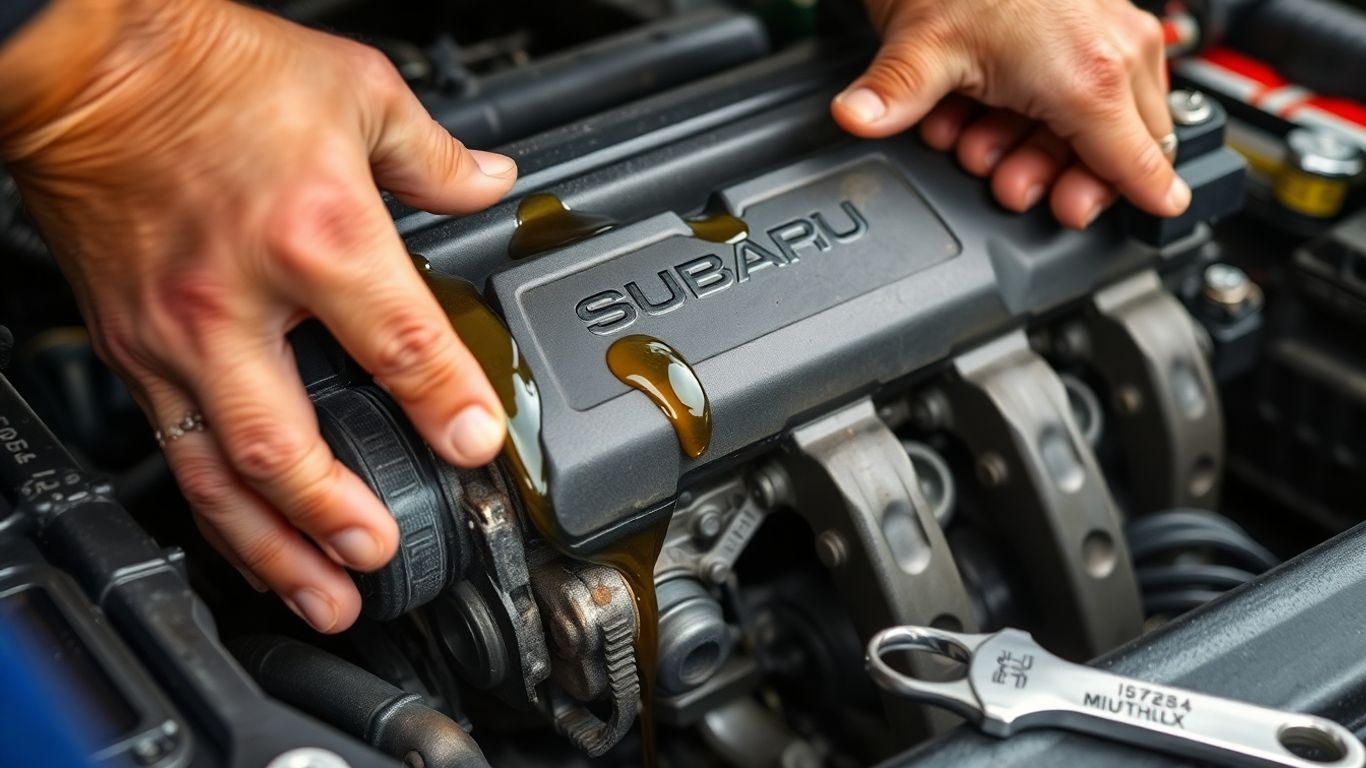
Valve Cover Gaskets and Their Failure
Subaru’s boxer engines, with their unique flat design, often experience oil leaks from the valve covers. These covers seal the top of the engine where the camshafts are housed. Over time, the gaskets sealing these covers can become brittle and crack, especially with heat cycles. This leads to oil seeping out, often noticeable as drips on the exhaust manifold, which can cause a burning oil smell. It’s a common issue, particularly on older models, and usually requires replacing the gaskets on both sides of the engine for a complete fix.
Oil Filter Housing and Cooler Adapter Leaks
Another frequent culprit for oil leaks in Subarus is the oil filter housing or the oil cooler adapter, if equipped. These components are typically made of metal and sealed with O-rings or gaskets. The O-rings can degrade over time, becoming hard and cracked, allowing oil to escape. Sometimes, the housing itself can develop hairline cracks. These leaks can be tricky to spot as the oil might spread around the engine bay before dripping, making it look like a more widespread issue.
Rear Main Seals and Oil Pan Gasket Issues
The rear main seal is located between the engine and the transmission. When this seal starts to fail, oil leaks from the back of the engine, often appearing on the transmission bell housing. This repair is more involved because it usually requires separating the engine from the transmission. Similarly, the oil pan gasket, which seals the oil pan to the bottom of the engine block, can also degrade. Leaks here are usually more obvious, appearing as drips directly underneath the engine. While sometimes a temporary fix like an additive might slow it down, a proper repair involves replacing the gasket.
Wrapping It Up
So, dealing with oil leaks on your Subaru doesn’t have to be a huge headache. We’ve gone over how to spot them early, figure out what’s causing the mess, and get it fixed right. Remember, catching a leak when it’s small can save you a ton of cash and trouble down the road. Keeping up with regular maintenance, like oil changes and just generally looking things over, is your best defense. It’s not just about keeping your Subaru running smoothly; it’s about protecting your investment and avoiding those surprise, expensive repairs. A little bit of attention now really does go a long way.




